
Urban Nature Is Not Romantic
Cities like to imagine themselves as places where nature has been carefully reintroduced.Trees carefully aligned along sidewalks, curated planters in cafés, small balconies filled with green, these images suggest harmony, a soft reconciliation between the built world and something organic.
Urban greenery is often presented as calming, restorative, even pure but this version of nature is mostly a story we tell ourselves. The reality of how plants live in cities is far less romantic because urban plants rarely grow in ideal conditions, the soil is limited, the watering inconsistent, the light obstructed by walls, glass and moving shadows, pollution settles on their leaves, roots are confined by concrete, wind tunnels and artificial surfaces that store temperature differently than soil ever would. And yet, they grow.
This is where the real meaning of urban nature begins not in beauty, but in persistence.
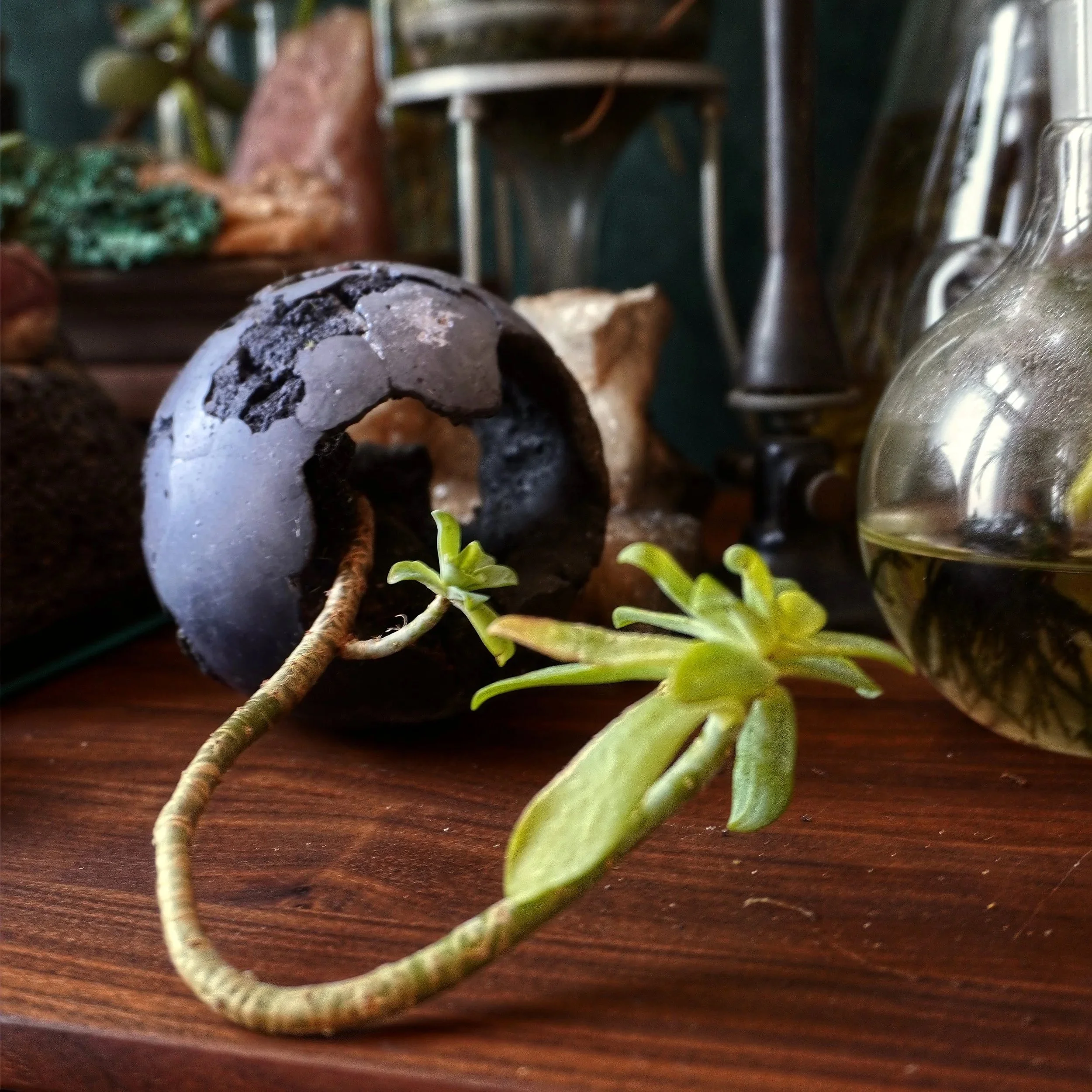
Survival Before Aesthetics
In natural landscapes, plants evolve within systems that support continuity: soil regenerates, water circulates, species coexist in layered relationships. Growth follows rhythms shaped over long periods of time and cities interrupt those rhythms.
Here, plants survive in fragments:
- A narrow strip of soil between pavement and asphalt,
- A plastic container on a fifth-floor balcony,
- A neglected courtyard that receives light for only a few hours a day.
Under these constraints, perfection is impossible, leaves burn, stems stretch toward distant light, growth becomes uneven or stunted. From a decorative perspective, these might look like failures and from a biological perspective, they are evidence of adaptation. Urban plants are not pristine. They are negotiated forms of life.
Improvisation as a Condition of Growth
Look closely at where plants appear in cities and a pattern emerges, many of the most striking moments of urban greenery are not designed at all, for example ,a weed breaking through a crack in the pavement, grass colonizing the edge of a construction site or an Ivy climbing a wall no one planned for it to reach. These gestures feel powerful precisely because they are unintended, they reveal that growth does not fully submit to planning even in environments built for control, something continues to push outward.
Improvisation becomes a survival strategy and the forms that result are irregular, sometimes awkward, often fragile but undeniably alive and this is a different aesthetic from the smooth images of curated urban greenery, it is provisional rather than harmonious, contingent rather than composed.
The myth of the calming plant
Contemporary culture often frames plants as tools for well-being,basically they are said to reduce stress, purify air, improve mood, soften productivity. While some of these claims have scientific nuance, their cultural use is simpler: plants become symbols of relief inside accelerated urban life but this framing risks flattening what plants actually represent in cities.
Urban plants are not calm; they are under constant pressure, endure heat waves amplified by concrete, irregular human care, sudden relocation, and environments fundamentally unsuited to long-term ecological balance. To call this “peaceful nature” is to overlook the tension that defines it so what plants offer in cities is not tranquility, but coexistence. They show that life continues inside constraint not perfectly, not beautifully, but persistently.
Beauty After Romanticism
It changes where beauty is located, instead of symmetry, we notice the direction a stem bending toward the only available light. Instead of fullness, we notice the endurance , a plant surviving with very little soil, instead of lush harmony, we notice contrast, green against dust, leaf against metal, growth against stillness.This beauty is quieter and less photogenic it does not promise escape from the city, it exists inside it and because of that, it feels more honest.
What Urban Plants Really Teach
If pastoral nature teaches cycles and abundance, urban nature teaches limits because it shows how life adjusts when conditions are partial, unstable or shared with infrastructures never designed for it.
This lesson extends beyond botany, to live in a city is also to negotiate space, light, noise, time and constraint. Urban plants mirror this condition, they grow where they can, with what they have, without certainty of continuity. Their presence is not decorative reassurance
It is quiet evidence that adaptation is possible.
A Different Way of Seeing Green
Perhaps the most meaningful shift is simply perceptual, instead of asking whether urban plants are beautiful, calming or well-styled, we might ask different questions:
How did this plant manage to grow here at all?
What conditions shaped its form?
What does its survival reveal about the space around it?
These questions move us away from consumption and toward attention away from romantic images and toward lived reality and in that shift, urban nature becomes more complex and more valuable not because it offers escape from the city,but because it shows life continuing inside it.
