
Old Growth Is Not an Antique
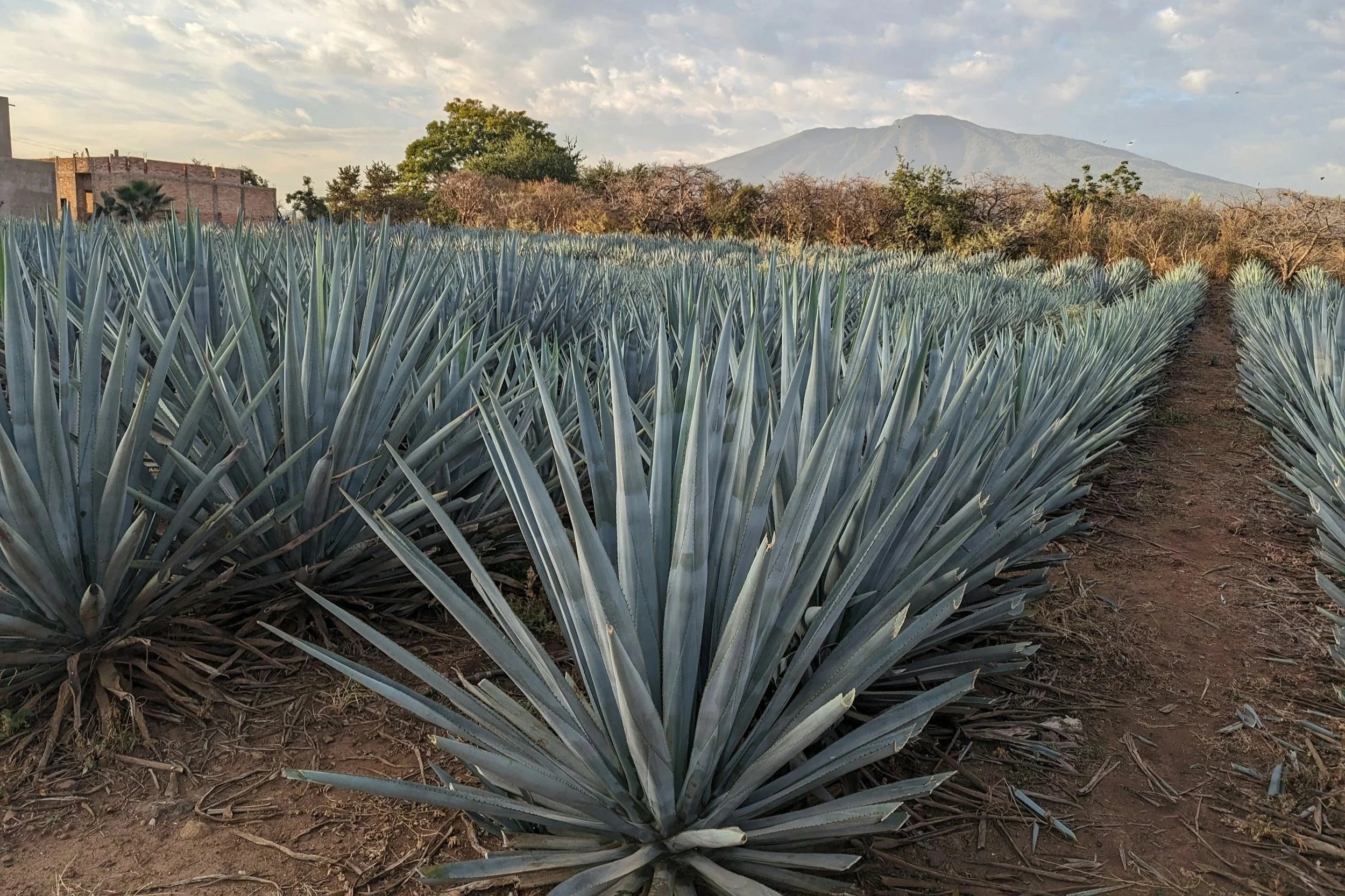
The century plant spends thirty years doing almost nothing visible. Low and slow, pulling water from soil that would kill most things, producing no flowers, no fruit, no signal that anything is happening at all. And then, once, it sends a single stalk straight up at a rate of twenty centimeters a day, reaches eight meters, flowers across every branch of that stalk, sets seed, and dies. This name exists because it seems to wait a century. From a human perspective, nothing is really happening, but the plant is not waiting at all, it is accumulating. What this reveals, though, is the difference between stillness and stasis.
We have inherited two cultural categories for old things, and neither of them is built for what the century plant is doing. The first is the antique: an object whose age is the point, whose value is fixed in what it has already been. An antique is finished. You preserve it, you do not tend it. The second is perhaps less named but equally familiar: the relic, the heirloom, the thing kept because it survived. Here too the age is retrospective, a story about the past. Both categories ask us to look backward at old things. However, in biology, age is often not retrospective at all. It is active, structural and doing something right now that it could not have done earlier.
Old-growth forest is the clearest example. An old-growth stand is not a forest that survived long enough to become an antique. Indeed, it is structurally irreplaceable in ways that have nothing to do with sentiment: multi-layered canopy, standing deadwood in every stage of decomposition, fungal networks that took decades to establish the chemical communication systems they use to move nutrients between trees, soil horizons built over centuries of specific biological activity in a specific place. None of this can be replanted into existence. None of it can be fast-tracked. It is the product of time as an active ingredient and most of us, having only the antique category available, miss it entirely.
The Mechanism, Not the Backdrop
Agave americana is monocarpic, which means it flowers once and dies. During the decades that look like nothing, the plant is photosynthesizing continuously and storing the resulting sugars as fructans in its core tissue, a kind of biological savings account that grows larger every year. The bloom, when it finally comes, draws on everything accumulated across the plant's entire life. The stalk grows so fast because it is not building from current photosynthesis; it is spending decades of reserves in a matter of weeks. The plant cannot bloom early. Stress it through drought and it delays. Move it repeatedly and it delays. The bloom comes when the reserve is ready, not when conditions become comfortable. Age, here, is not the backdrop to the plant's function. It is the mechanism.
After bloom, the plant dies. The offsets, which is a small plants that grew from the base of the mother, remain. They carry none of the accumulated reserve, none of the stored energy. They start over. They begin again at zero, embarking on their own thirty years of quiet accumulation, and this, too, is worth sitting with: the age cannot be inherited. It has to be lived.
What Only Time Builds
In forest ecology, the distinction between old-growth and secondary growth has nothing to do with size or apparent health and everything to do with structural complexity. A secondary forest can look dense, tall, biologically active. An old-growth stand can look, to an untrained eye, like a mess: fallen logs, canopy gaps, dead standing trees, irregular ground cover. It is not a mess. It is a system that has developed the full range of ecological niches a forest can contain, including the ones that depend on decay, on gap, on the specific chemistry of wood in different stages of decomposition. None of that complexity exists in secondary growth, regardless of how large the trees have become, because secondary growth has not yet had time to die and rot in the right patterns.
Ecologist E.P. Odum described mature ecosystems as supporting a great deal of life relative to the energy they process, because they have built up structural capital over time. Young systems process energy efficiently but support less structure. The difference is not how many years have passed, but what those years have deposited.
The age is not portable. It is site-specific, structurally embodied, the product of a particular organism in a particular place accumulating a particular history. This holds at the scale of a single plant too. An old olive tree has a root system shaped over decades by the specific underground conditions of its location, where the water table sits in August, which rock faces deflect heat, which channels carry the first autumn rain. What the tree has built is not genetic; it is physical, structural, local. A cutting taken from that tree carries the DNA but none of this. The cutting inherits the blueprint, not the building. It arrives in new soil with no memory of where water is, no network already reaching toward it, no decades of structural adaptation to the specific geometry of a place. It starts over. Although it is genetically identical to the original tree, it is not that tree, and it will not become that tree in any lifetime a gardener is likely to witness.
Tending Past the Expected
Most plants people keep indoors that were not expected to last that long. A pothos bought for a first apartment. A fig that came with a job that no longer exists. A rubber plant that has survived three apartments, two relationships, and a period of being watered maybe four times a year.
There is a category shift that happens when a plant outlives the context that produced it. It has been repotted. It has had limbs cut. It has bent toward windows facing different directions in different rooms. The shape it has now is the product of all of that accumulated history , of the decisions made, the conditions adapted to, the specific light of every room it has ever lived in. In fact, the plant you have now is not the plant you bought. It is what that plant became in the particular sequence of places and decisions that followed.
Oliver Rackham, writing about ancient trees in Britain, made a distinction between trees that are old and trees that are ancient. Ancient meaning not just numerically old but structurally transformed by age into something categorically different from a younger tree of the same species. Ancient trees have hollow cores, collapsed crowns, bark with decades of specific microhabitat built into its surface. They support species that live nowhere else. Their value is ecological, irreplaceable, and ongoing. They are, in Rackham's framing, still working.
That phrase is the one worth carrying. The question it raises is not how long something has survived, but what the survival has built and what is in there now that was not there at the beginning, what work the age is doing. The century plant does not look like it is doing anything. However, it is spending thirty years getting ready to do the only thing it will ever do once. What do you have in your house that you stopped looking at closely enough to notice?
