
What Breaks and What Doesn't: Damage, Repair, and the Plants That Grow Back
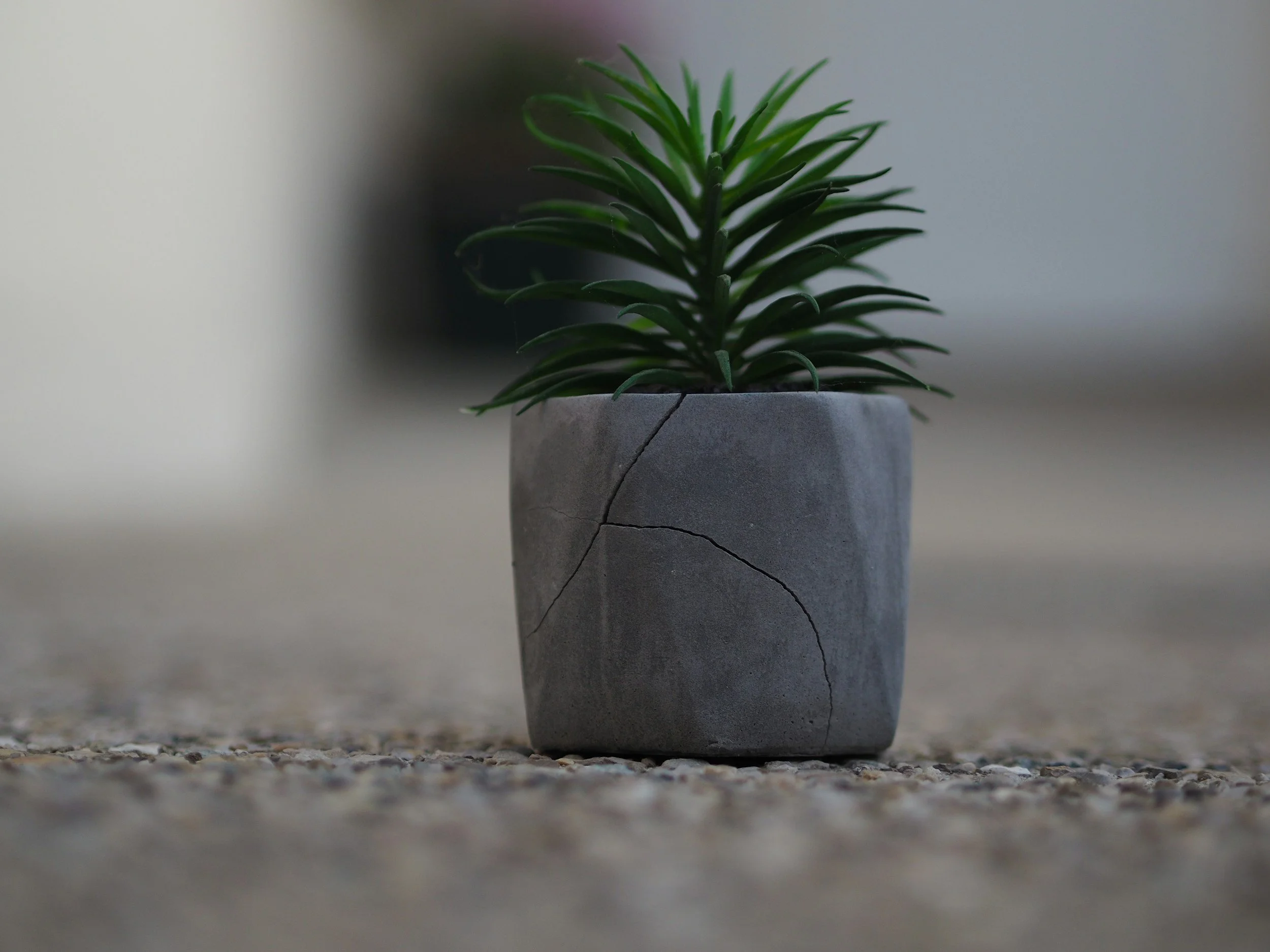
There is a pot on a shelf somewhere that has a crack running through it. It has been there long enough that you have stopped seeing it as broken and started seeing it as “the pot with the crack”, that is now a different object from the one you bought, but still useful and still holding its story.
However most things do not get that chance and when they break they get thrown away.
This is a relatively recent habit. In fact, for most of human history, the broken thing was repaired because replacement was expensive or impossible, the materials that went into making it were too valuable to discard and the skill required to fix it existed in the community and was considered worth using. The throwaway reflex is not a natural response to damage. It is rather a learned one, and it was taught deliberately, by an economic system that needed people to buy new things rather than maintain old ones. And in conclusion, unfortunately, what gets lost in that habit is harder to quantify than the object itself.
Broken Is a Beginning
Kintsugi is a Japanese practice of repairing broken ceramics with lacquer mixed with gold, silver, or platinum. With this technique the repair is not hidden, it is voluntarily made visible. The crack is filled and highlighted and the damage traced in metal so that the repaired object carries its history on its surface. The philosophy behind this comes from wabi-sabi, a Japanese aesthetic worldview that Leonard Koren described in Wabi-Sabi for Artists, Designers, Poets and Philosophers (1994) as the acceptance of transience and imperfection as conditions of beauty rather than departures from it. Wabi-sabi finds value in the weathered, asymmetrical, incomplete, in things that show evidence of time and use rather than things that have been protected from both. It is, among other things, a direct counter to the aesthetic of the pristine, the new, the perfectly finished object that has not yet been touched by the world.
Andrew Juniper, in Wabi Sabi: The Japanese Art of Impermanence (2003), traces this sensibility through Japanese architecture, garden design, and the tea ceremony, all of which share an understanding that the most interesting beauty is the kind that has been through something. The tea bowl that has been repaired with kintsugi is more valuable, in this tradition, than the one that was never dropped, because it contains more history. It has survived something, and the survival is recorded in gold.
What Plants Do With Damage
Cut a lavender plant hard in spring down to the woody base, further than feels safe and watch what happens over the following weeks. New growth emerges from the base of the stems, greener and more vigorous than what was removed. The plant that looked finished sends up growth precisely because it was cut, and by this the pruning redirected energy that had been distributed across too much old wood toward the points of new possibility.
This is not just a metaphor first. It is biology. Plants have developed, over hundreds of millions of years, responses to damage that are in many cases more sophisticated than their responses to ideal conditions. Damage is a normal part of a plant's life, think about grazing animals, storm damage, drought, fire, and the plants that survived were the ones that had evolved mechanisms for responding to it. The response is active reorganisation.
The rhizome is one of the more remarkable examples. A horizontal underground stem that can extend laterally and send up new shoots at intervals, the rhizome allows certain plants to survive almost complete destruction of what is visible above ground. Irises, ginger, bamboo if cut to the soil and the rhizome remains, carrying the reserves and the growing points that will produce next season's growth. The plant is not dead, it has simply moved underground, to the part of itself that the damage could not reach.
The Banksia, a genus of flowering plants native to Australia , takes this further. Many Banksia species produce seed pods that are serotinous: sealed with resin that melts only at the temperatures produced by fire, releasing seeds into the ash-enriched soil of a burned landscape at the moment when competition has been cleared and nutrients are at their highest. The plant has evolved to use fire as a trigger. Research by Ofer Lahav and colleagues on fire-adapted plant species confirms that for many plants in fire-prone ecosystems, burning is not destruction but activation. The fire does not kill the plant's future. It releases it.
J.P. Grime, in Plant Strategies and Vegetation Processes (1979), described the ecology of disturbance and recovery. The way plant communities respond to damage is with a restructuring that is, over time, generative. The pioneer species move in first: mosses, ferns, the plants adapted to bare and difficult ground. They stabilise the soil, add organic matter, change the conditions in ways that allow the next layer of complexity to establish. The damaged landscape is at an earlier stage of a process that, given time, will produce something richer than what was there before.
Good Enough Is Enough
There is a practical tradition, running through gardening culture in various forms, of planting in damaged vessels. The cracked pot that can no longer hold water becomes the pot for the plant that prefers dryness. The chipped bowl that was retired from the kitchen becomes a container for succulents. The broken terracotta that split along a fault line becomes two containers instead of one, each housing something that fits its new dimensions.
This is not making the best of a bad situation. It is recognising that the broken thing has different properties from the intact one, and that some of those properties are useful. A pot with a crack drains differently. A vessel with a chip breathes differently. The damage changes the object's relationship with water, air, and the plant growing in it.
The fig tree that grows from the crack in a wall is making the same point from the other direction. It did not choose an ideal location. It germinated where the conditions were marginal, such as a gap in the mortar, a pocket of accumulated dust and moisture, a surface that most plants would find inhospitable. What it found in the crack was enough. The damage in the wall became the opportunity in the plant's life, and the fig growing from the stonework is usually more interesting to look at than the one in the carefully prepared bed.
Visible Mending and the Aesthetics of What Survives
There is a contemporary movement in textiles called visible mending. This is the practice of repairing worn or damaged clothing in ways that make the repair obvious rather than hiding it. A darned patch in a contrasting colour. A sashiko-stitched reinforcement that turns the damaged area into a design element. The repaired garment as something more visually interesting than the original, because it contains evidence of use and of the decision to continue.
Sashiko is a Japanese embroidery tradition originally developed as a reinforcement technique, stitching layers of fabric together to add warmth and durability to working clothes. The stitching is geometric, repetitive, and visible by design. What began as a structural necessity became an aesthetic tradition, the functional choice becoming, over time, the beautiful one.
The same logic runs through kintsugi, through the cracked pot with the plant in it, through the pruned lavender sending up new growth from its damaged base. Masanobu Fukuoka, the Japanese farmer and philosopher who wrote The One-Straw Revolution in 1975, spent his career arguing that working with natural processes of recovery, rather than overriding them with intervention, produced better outcomes than the managed, controlled, chemically assisted approach of industrial agriculture.
The repaired thing and the recovering thing share a quality that the new thing and the managed thing do not. They have been through something, and the evidence of that passage is part of their current state. This is either a problem or it is the most interesting thing about them.
The Ground Doesn't Grieve
Leave a cleared field alone for long enough and it will not stay a cleared field. The first year, pioneer plants move in, the species adapted to bare, disturbed ground, the ones that can establish without the benefit of existing soil structure or mycorrhizal networks or shelter from other plants. Mosses, certain ferns, the fast-growing annuals that produce enormous quantities of seed because they know, in whatever sense a plant knows anything, that their occupation of this ground is temporary.
Over years and then decades, the composition shifts. Perennials establish. Shrubs follow. Given long enough, and the right seed sources nearby, trees return. This process follows a logic called succession, in which each stage creates the conditions for the next, in which the pioneer species are not permanent residents but preparation. The moss that stabilises the bare soil is making the ground habitable for the fern. The fern's accumulated organic matter is building the conditions for the shrub. The shrub's shade and root system are creating the environment in which a tree seedling can survive.
The cleared field does not mourn what it was. Conditions have changed, and the ecosystem responds to what is there now rather than what was there before. What follows is not a return but a building forward, each stage carrying in its structure the history of the disturbance that started it. The ground that was cleared becomes, over time, something new that would not have existed without the clearing. The damage is not erased. It is incorporated.
The broken object that gets repaired with gold is not the same object it was before it broke. It is a more complicated one, and the complication is visible, and the visibility is the point. The plant that grows back from the rhizome after the frost has taken everything above ground is not the plant it was before winter. It is the plant that survived winter, and that survival is written into its structure now, into the way it grows, into what it can withstand the next time.
The crack is not the end of the story. In the best cases, it is where the story gets interesting.
Sources: Leonard Koren — Wabi-Sabi for Artists, Designers, Poets and Philosophers (1994) / Andrew Juniper — Wabi Sabi: The Japanese Art of Impermanence (2003) / J.P. Grime — Plant Strategies and Vegetation Processes (1979) / Masanobu Fukuoka — The One-Straw Revolution (1975) / Research on serotinous plants and fire-adapted species: Lahav et al. / Specific plants referenced: Banksia, lavender, fig, iris, bamboo, mosses and ferns as pioneer species
