
Can a Plant Be Luxury?
For most of human history, plants have been associated with survival rather than luxury. They provided food, medicine, shelter, fuel, and materials and their value was practical and ecological, tied directly to their role within a living system, yet in recent years, a curious transformation has taken place, certain plants now circulate through markets in ways that resemble collectible objects rather than living organisms. Prices rise dramatically, waiting lists form, and individual specimens become symbols of rarity and exclusivity and here raises the question : can a plant truly become a luxury object, or are we witnessing something else, the projection of luxury culture onto biology?
To understand this shift, it is important to recognize that luxury rarely originates in the object itself, because this concept is constructed through narrative, it depends on scarcity, desirability, and the perception of access being limited. A rare gemstone becomes luxury because its extraction is difficult and its availability restricted, or a designer garment becomes luxury through branding, craftsmanship, and controlled distribution. When plants enter this framework, the logic becomes more complicated, because plants are not static objects, they grow, propagate, mutate, and reproduce. Their very nature resists the permanence that luxury goods typically rely on.
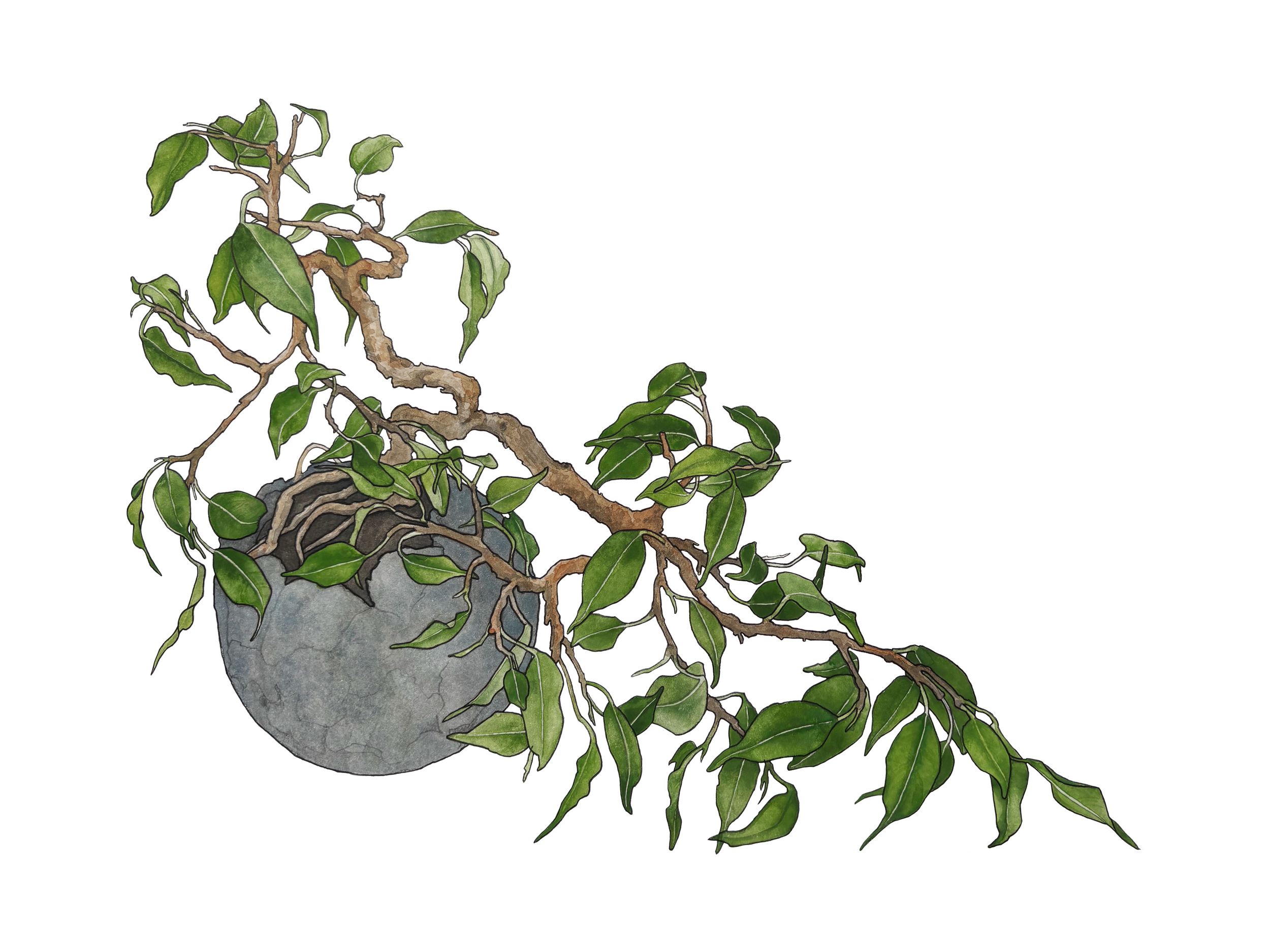
Art by Nadia Oettingen
Rarity in plants can be real because certain species evolve in extremely specific ecological conditions and exist naturally only within narrow geographical ranges or others develop unusual genetic mutations that alter leaf shape, color, or growth pattern. In botanical terms, these variations are fascinating but not necessarily permanent. Through cultivation and propagation, what begins as rare can become common, a cutting taken from a single plant can eventually produce dozens, then hundreds, then thousands of genetically identical descendants and , in theory, time should dissolve rarity and yet markets often behave differently. Scarcity can be maintained through controlled access, limited supply chains, or cultural hype. When a plant becomes desirable, its perceived value can increase faster than its biological reproduction can compensate. Prices escalate not because the organism itself has changed, but because the narrative surrounding it has intensified, so owing this plant becomes symbolic. The plant represents access, knowledge, or status rather than simply being a living organism with leaves and roots. This shift reflects broader patterns within contemporary consumer culture. Many industries have moved toward the commodification of uniqueness. Objects gain value when they appear exclusive or difficult to obtain, in this context, plants can begin to resemble collectible items similar to rare sneakers, vintage furniture, or limited-edition artworks, their worth becomes tied less to ecological significance and more to cultural capital. The plant is no longer just something that grows; it becomes something that signals.
There is a tension here that makes plants unusual luxury objects. Unlike a watch or a handbag, a plant is unstable, it’s a subject of stress, disease, pests, and environmental change. Its appearance can shift dramatically depending on light, humidity, and care, so it can decline without warning. A single healthy specimen can eventually generate an entire lineage through cuttings or division and this biological unpredictability makes plants resistant to the fixed value structures that luxury markets typically depend on. At the same time, the demand for rare plants can have real ecological consequences. When market attention focuses on species that exist in fragile ecosystems, there is a risk that wild populations become targets for extraction, collectors and traders may seek specimens directly from their native environments, sometimes illegally, removing plants faster than ecosystems can regenerate them and , in these cases, the narrative of rarity becomes self-fulfilling: the more valuable a plant becomes, the more pressure is placed on the environments where it naturally grows, but the phenomenon is not only about environmental risk, it also reveals something about how we assign meaning to living things.
A plant in a forest, hillside, or desert is rarely framed as luxury, it exists as part of a larger ecological network. When the same plant is placed within a market context, its identity changes, it becomes an item with a price, a collectible specimen, a symbol of taste or dedication. The organism remains the same, but the story around it transforms completely. This transformation raises an interesting question about our relationship with nature: are we valuing plants for what they are , or for what they represent within human economies? The distinction matters. When the emphasis shifts entirely toward ownership and status, the biological reality of the plant can become secondary to its symbolic role, yet plants also quietly resist full commodification, they grow slowly, change over time and can surprise their caretakers by thriving unexpectedly or declining without obvious reason. Even the rarest specimen remains a living organism that requires conditions, attention, and time.
In that sense, the idea of a “luxury plant” reveals more about human culture than about plants themselves. It shows how easily systems of exclusivity can extend into unexpected territories, even into the domain of biology and, at the same time, it reminds us that life does not always align with the structures we try to impose on it. Plants continue to grow according to their own rhythms, whether valued at a few euros or a few thousand. Perhaps this is where the tension ultimately settles. Markets can label a plant as luxury, collectors can assign it status, and prices can rise dramatically, but the plant itself remains indifferent to these designations, it continues to follow the same quiet processes it always has : extending roots, producing leaves, responding to light, and, given enough time, creating new life that may eventually make rarity disappear altogether.
