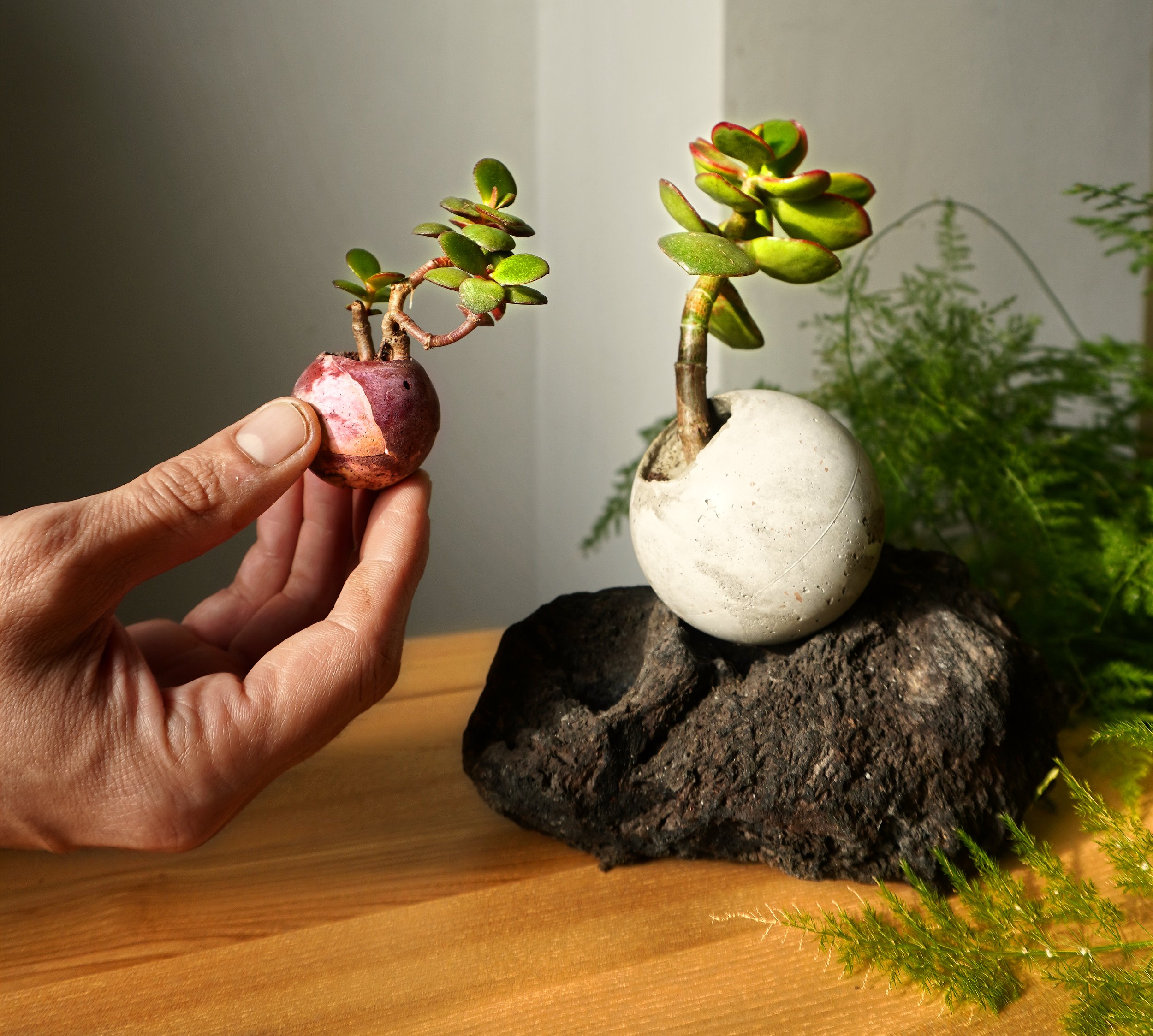
Slowness as a Design Choice
Contemporary environments are increasingly shaped by the expectation of immediate response, because we move through doors that open before contact, enter rooms that illuminate automatically, and interact with systems designed to eliminate hesitation, friction, and uncertainty. Waiting is treated as a malfunction rather than a condition of experience, and efficiency becomes not only a technical objective but a cultural value that quietly determines how spaces are organized and how bodies are expected to behave within them. In this framework, time is understood primarily as something to reduce, compress, or optimize so successful spaces are the ones who feels fast, seamless, and continuously available to action.
Against this background, the presence of plants introduces a fundamentally different temporal logic. Plants do not respond to urgency, nor can they be persuaded to accelerate according to human schedules. Their growth unfolds through biological processes governed by light, water, temperature, and internal rhythm rather than productivity or expectation. Even under attentive care, visible change occurs slowly enough that it often escapes daily perception and this refusal of immediacy is not dramatic, yet it has spatial consequences. By occupying the same environments structured around speed, plants bring with them a form of time that cannot be compressed, outsourced, or automated, quietly altering how a space is felt rather than how it functions.
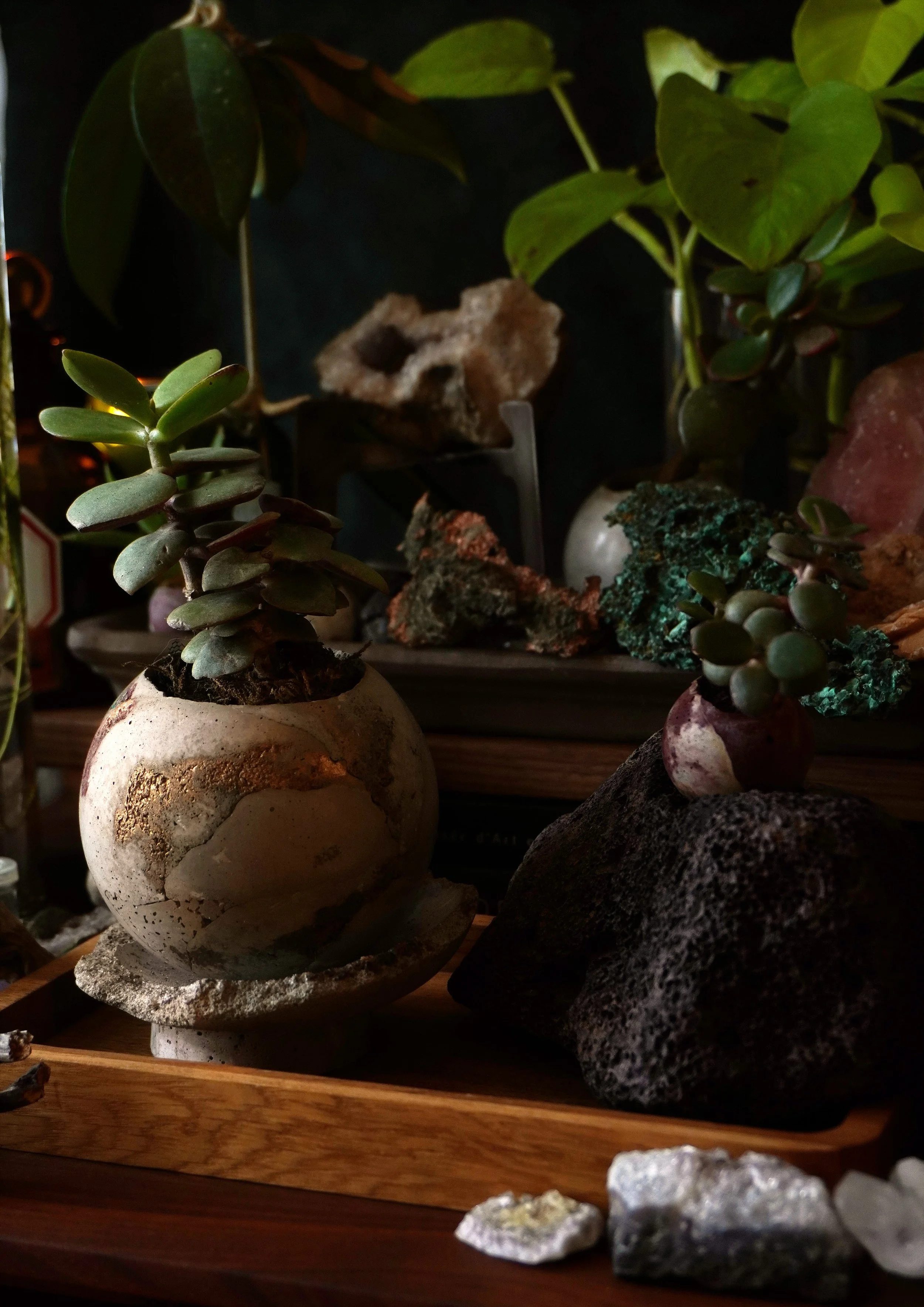
Most designed objects aim toward stability and completion, once a chair is positioned, a surface finished, or a layout resolved, the design decision signals finality and control, the environment becomes predictable, readable, and fixed in its intended form. Living matter disrupts this sense of conclusion because plants continue to grow, decline, recover, and transform regardless of whether they are being observed, their presence means that a space is never entirely settled, because something within it remains in process. This ongoing transformation does not demand attention, yet it continuously registers the passage of time, making duration perceptible in ways that static materials cannot.
To live with plants therefore requires a different mode of attention from the one encouraged by most contemporary systems. There is no instant feedback loop, no clear confirmation of success, and no guarantee that care will produce the desired outcome, watering, adjusting light, observing subtle shifts in leaves or soil, these actions form a relationship structured by repetition rather than efficiency, meaning emerges gradually, through continuity instead of speed. In this context, slowness should not be mistaken for passivity or nostalgia, it operates instead as an alternative temporal structure existing within accelerated culture, expanding the experience of time rather than resisting modernity outright. This expansion has spatial as well as psychological implications, because when a room containing plants is experienced differently from one composed solely of inert materials, even when this difference is difficult to articulate. Beneath apparent stillness, biological activity is ongoing and these invisible movements introduce a layer of temporal depth that exceeds the fixed logic of furniture, walls, and objects. The space is no longer merely arranged; it is continuously becoming, design in this sense, shifts from the production of finished form toward the maintenance of evolving conditions.
Seen from this perspective, plants are not decorative additions applied after an interior is complete, nor symbolic gestures toward an abstract idea of nature, they function instead as temporal agents that prevent completion from ever being absolute. By keeping environments open to change, uncertainty, and care, they challenge the assumption that good design must always deliver permanence, clarity, and control. This position resonates with a broader material sensibility in which value is located in process rather than perfection, in lived reality rather than polished image, and in coexistence with time rather than mastery over it. Within such a framework, plants matter less for what they represent than for what they make perceptible: duration, dependency, and gradual transformation.
Choosing to live with plants therefore becomes more than an aesthetic or lifestyle decision; it becomes a decision about how time is allowed to exist within everyday space. To accept slow growth is to acknowledge that not everything meaningful can be accelerated that is to say, to care for something living is to participate in repetition without immediate reward or to share space with plants is to permit the environment to remain unfinished, responsive, and open to change. Slowness, understood in this way, is not the opposite of movement but the condition that allows certain kinds of movement to appear at all: biological, emotional, and temporal processes that require duration in order to become visible. Designing space that can hold this slowness is therefore not simply a matter of adding greenery, but of allowing time itself to remain present.