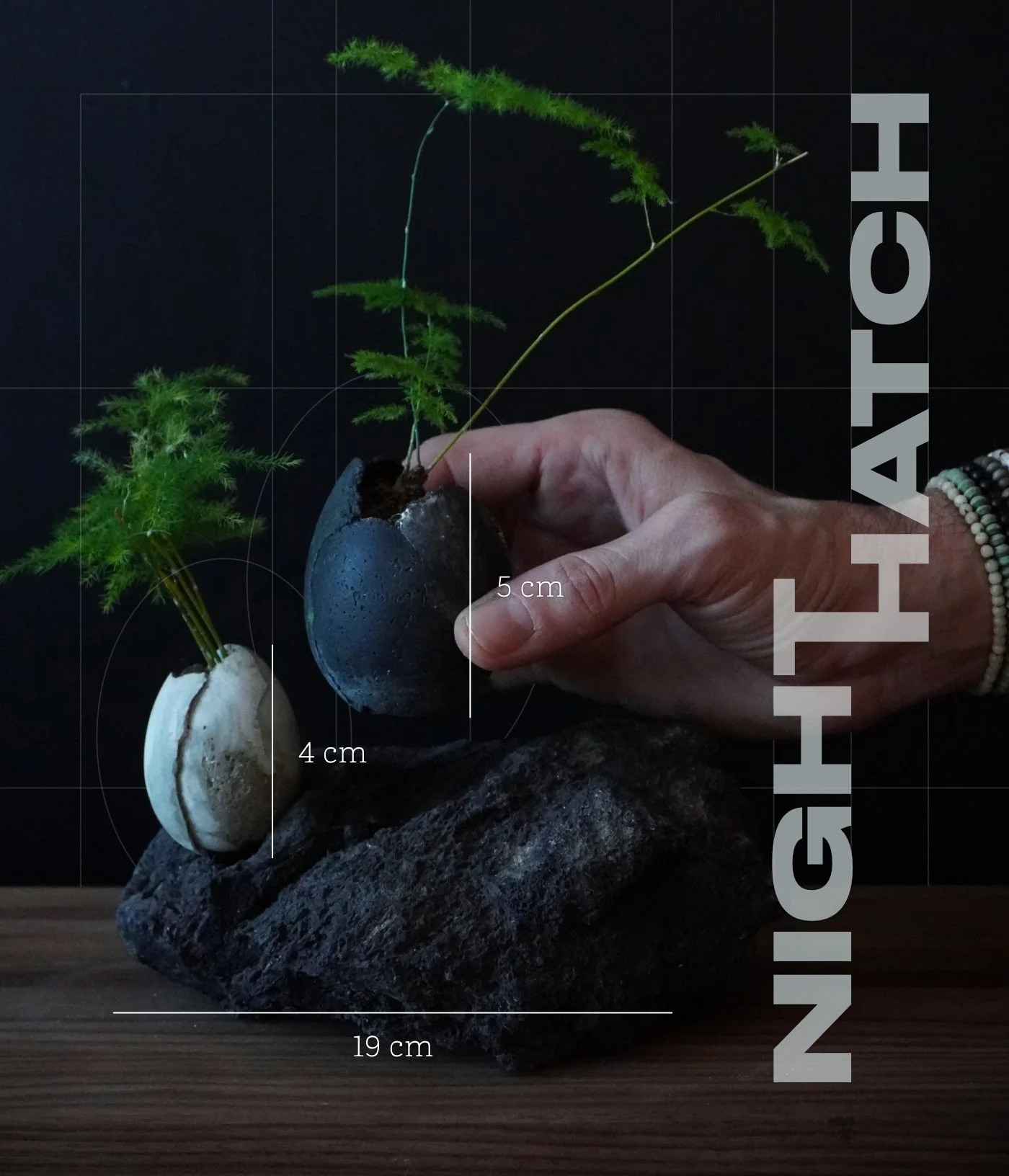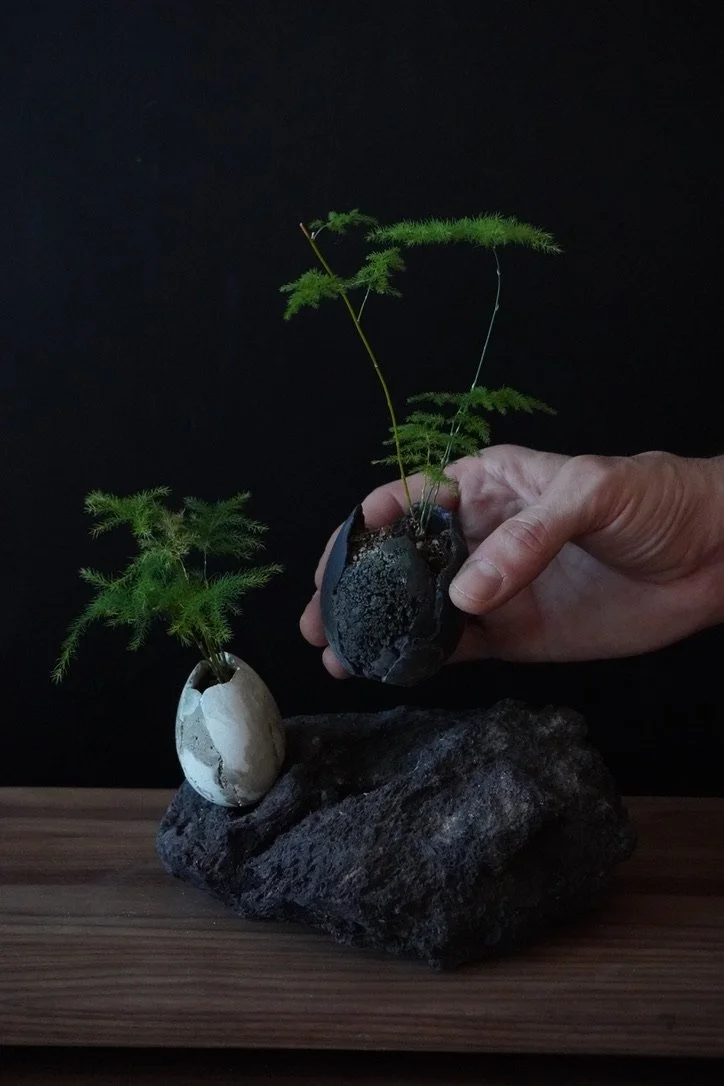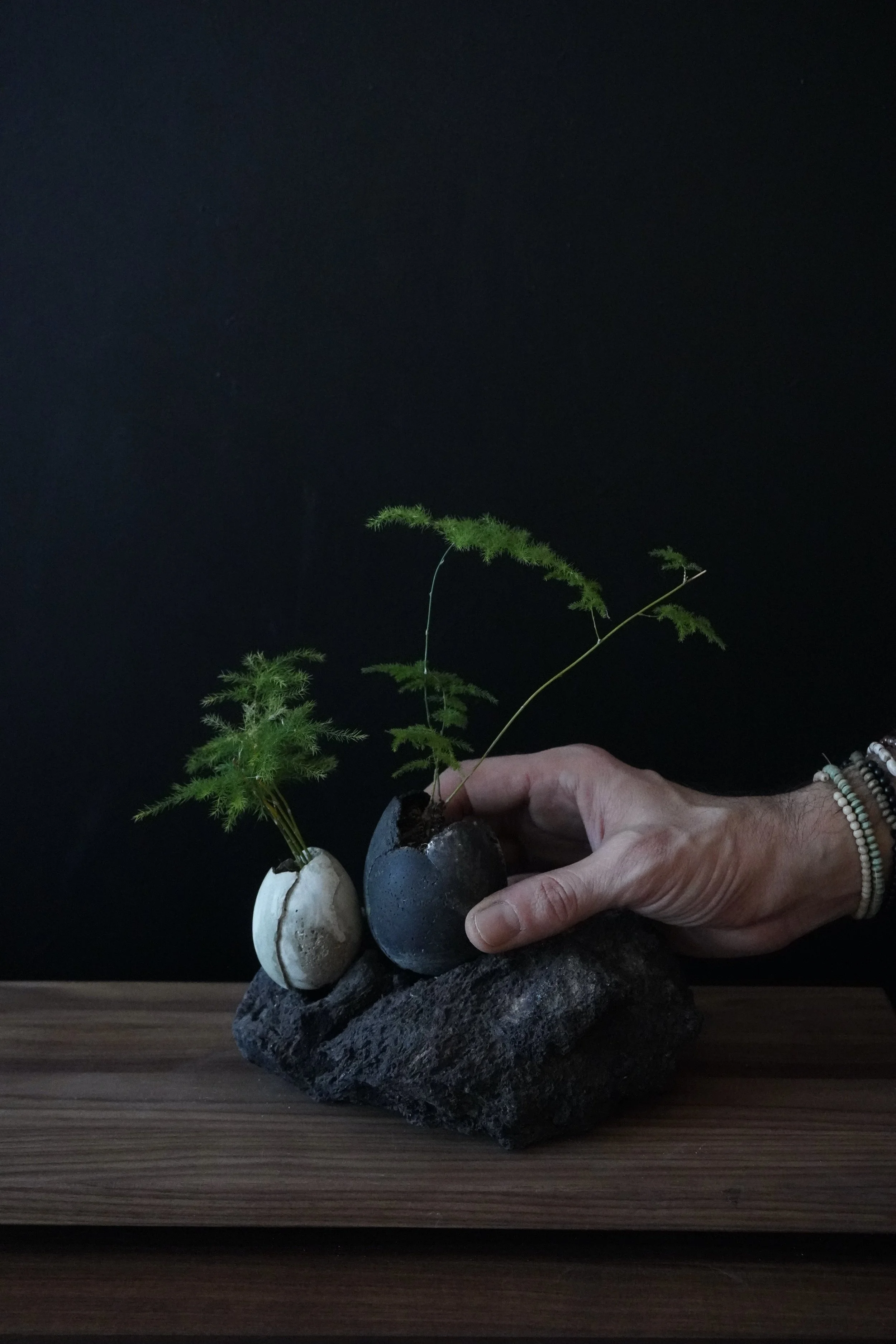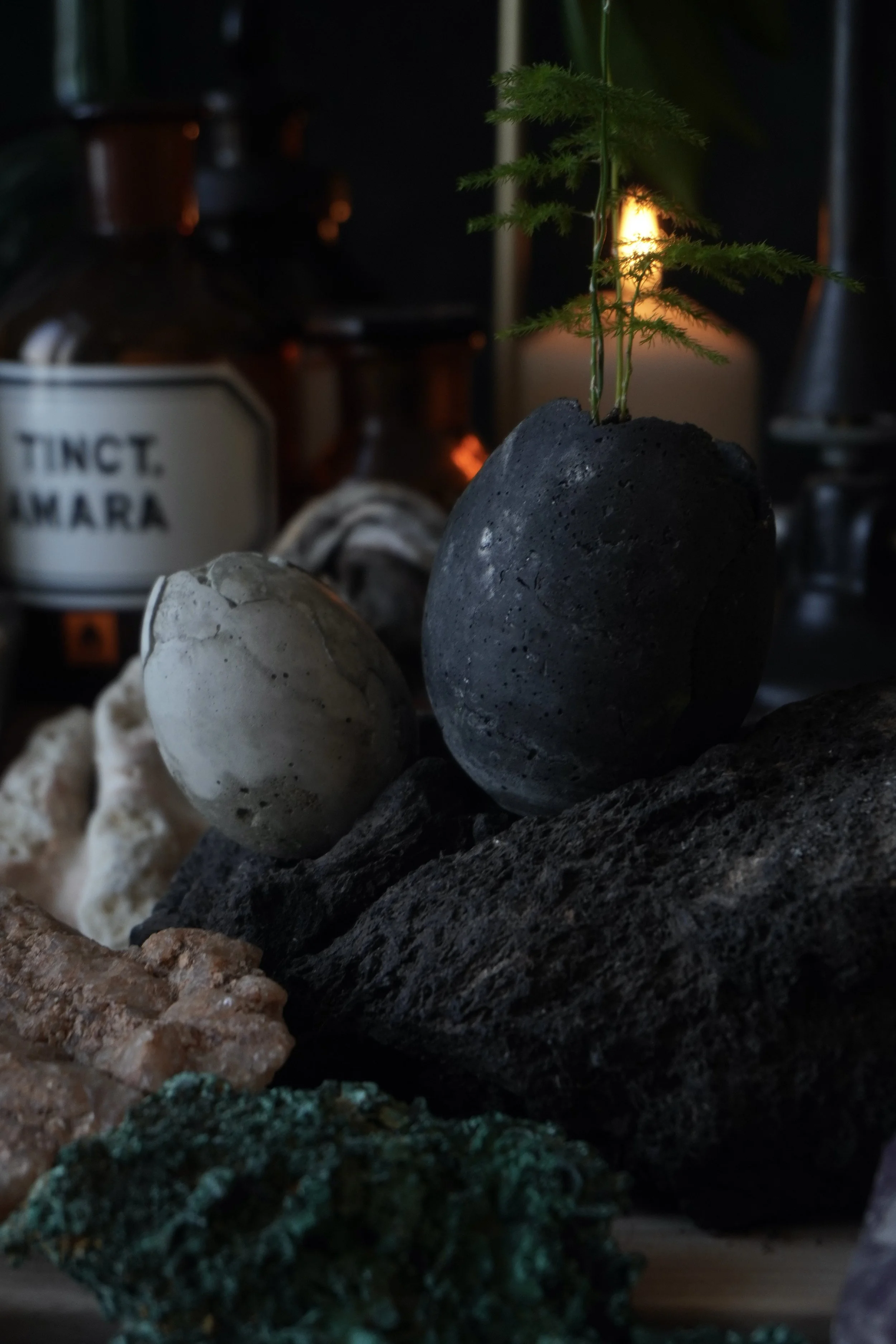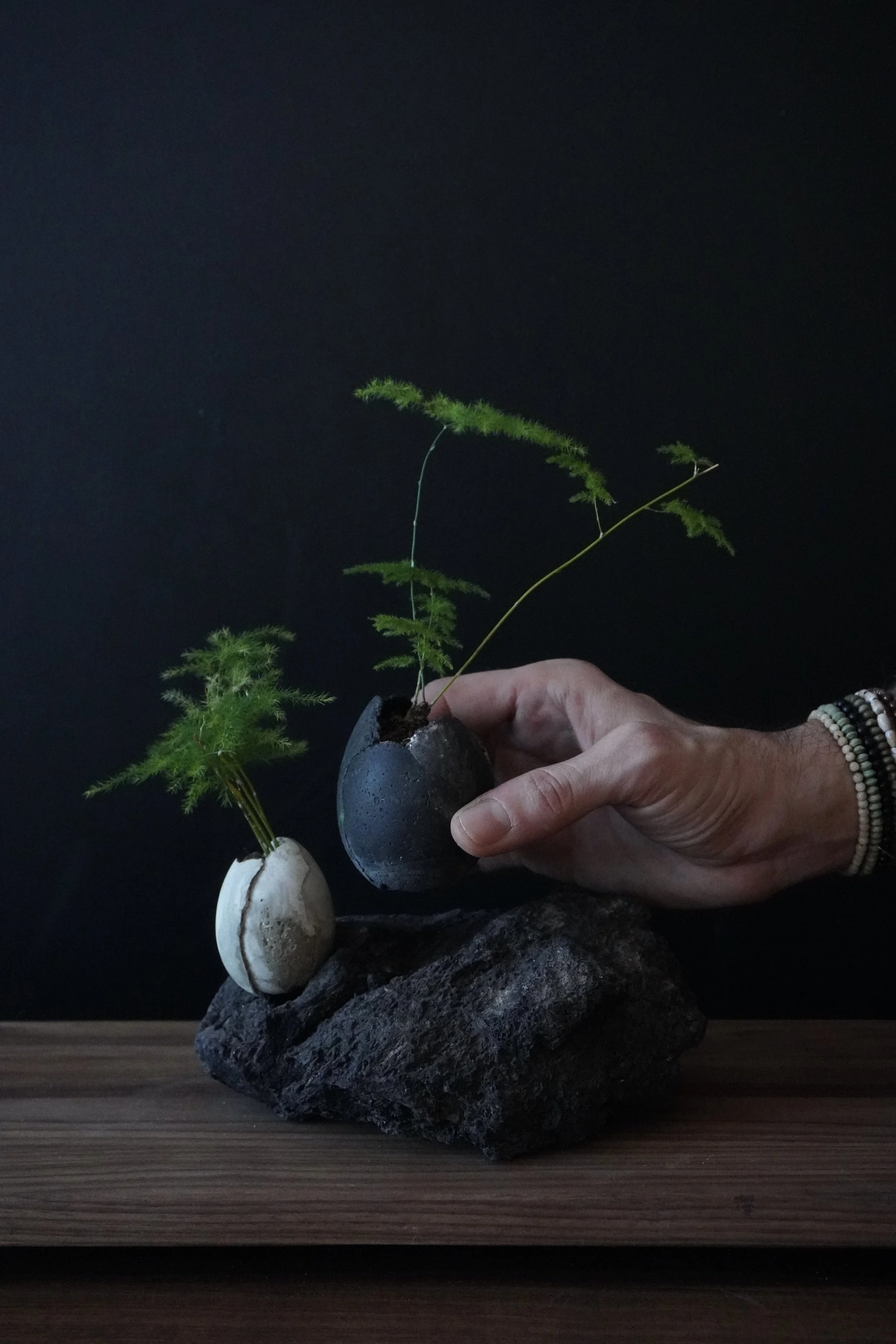
NIGHT HATCH is a small volcanic landscape where two ancient eggs cradle soft, bright-green asparagus ferns, poised as if about to awaken on a lava shore.
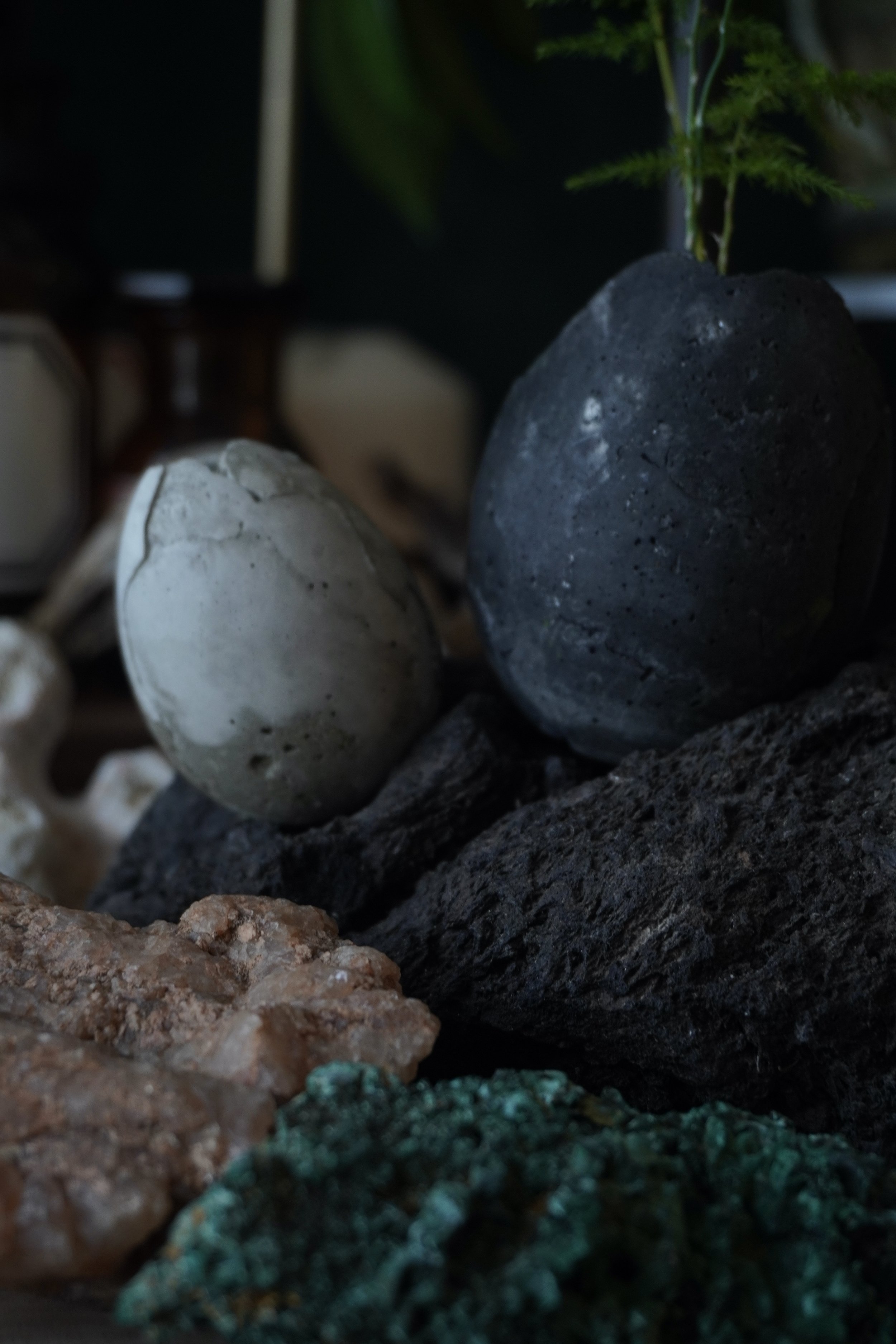
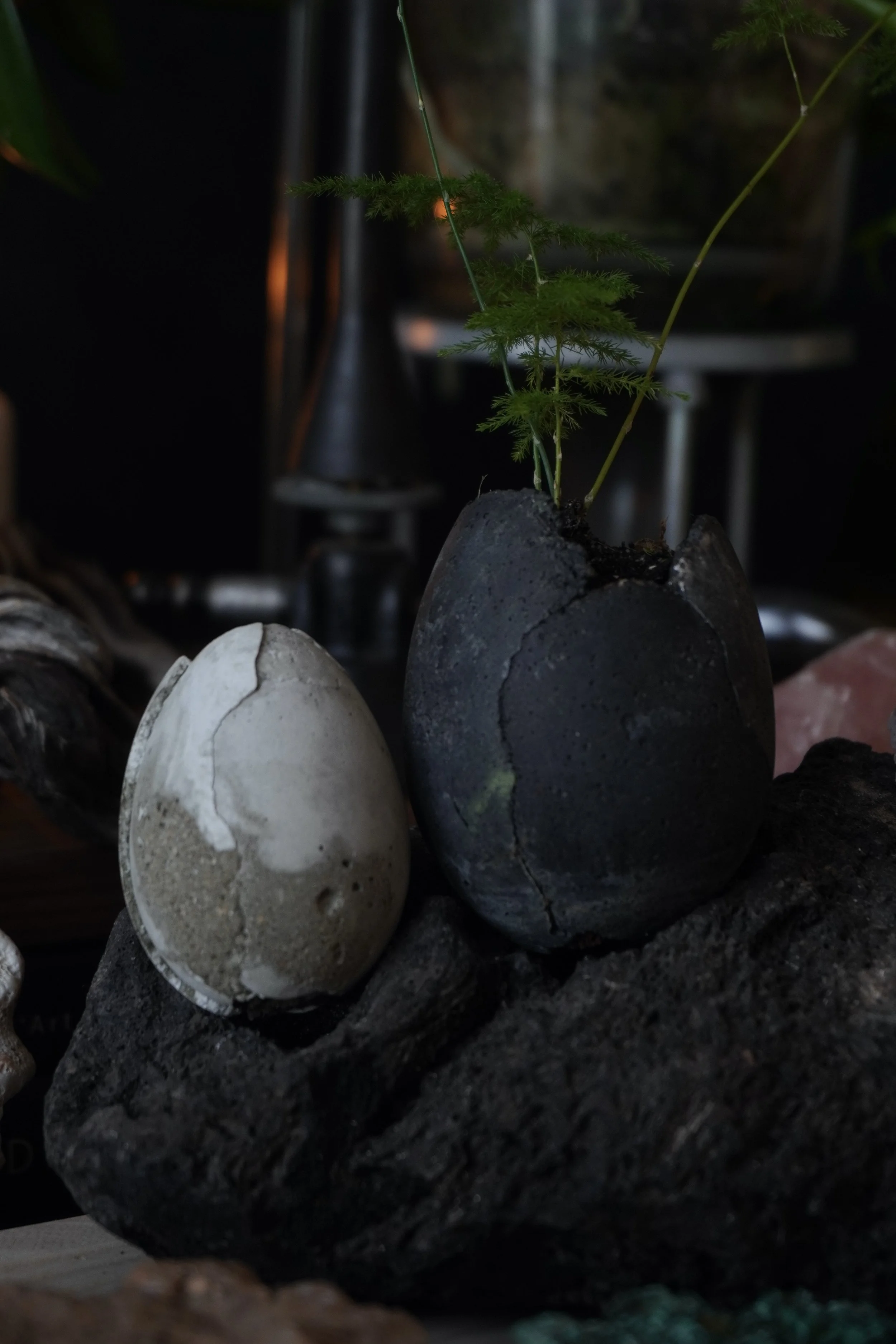
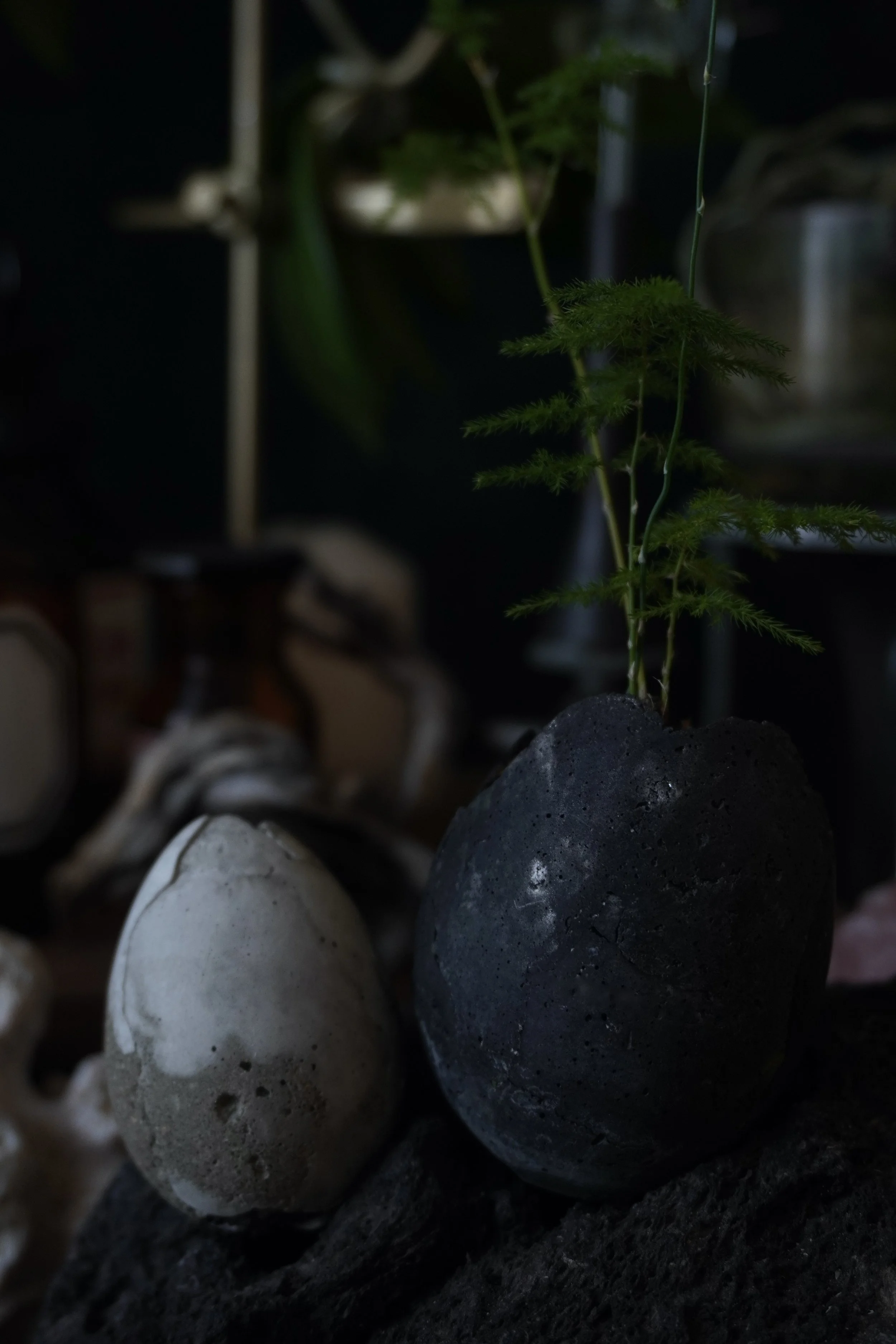
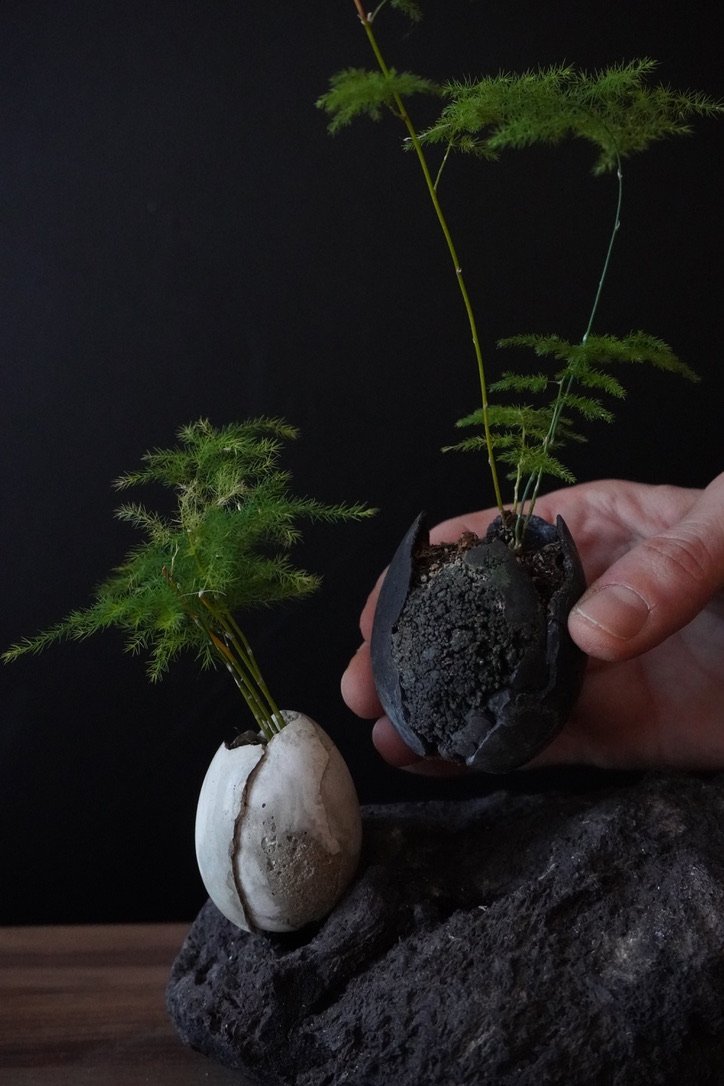
The surfaces are textured and imperfect, with small scars and pitted marks that feel more like eroded bone or fossil than smooth ceramic. The contrast of the pale “fossil” egg and the darker, almost charred egg reads like day and night, or two different ages of the same world.
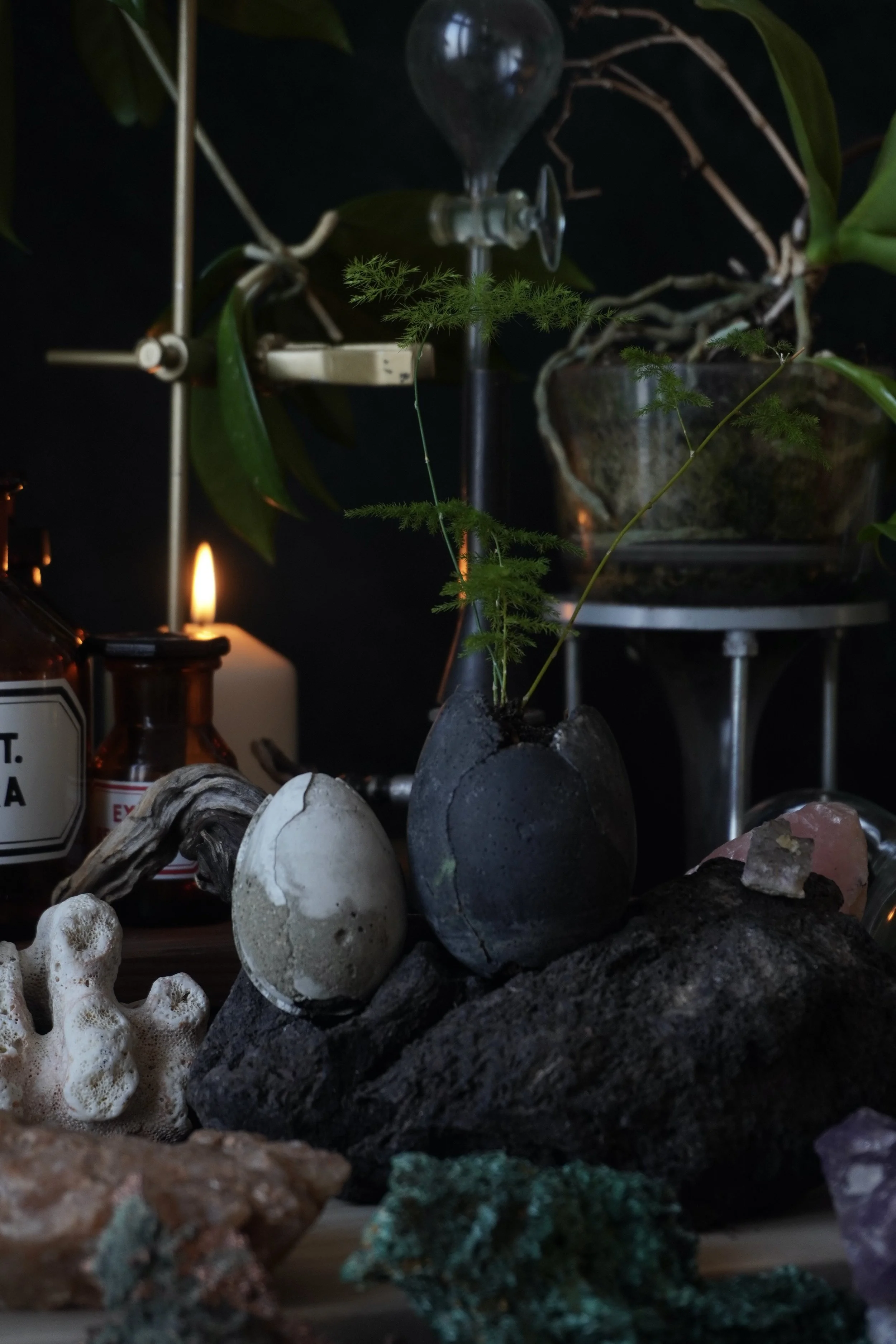
Asparagus ferns rise from the broken tops like the first forest after an extinction event—delicate, feathery, almost prehistoric in their own right. Paired with the lava rock base, the whole piece suggests cooled magma, an abandoned nest, and the slow, quiet return of green life.
Why it’s a piece to keep
I didn’t design it. I wanted it to look discovered—like something you might find on a black-sand beach on an extinct island. On a shelf or desk, NIGHT HATCH reads as an art object first and planters second, which makes it incredibly easy to style with books, fossils, crystals, or your other Dirty Roots pieces.
The drainage through the eggs into the lava rock pockets is functional, but it also reinforces the narrative: water seeps through old shells and carves its way into stone, just as it does in real landscapes.
If you want a piece that quietly tells a whole sci‑fi–meets-paleontology story every time you walk past it, NIGHT HATCH is that object—the aftermath of a cosmic hatch, now claimed entirely by nature.
NIGHT HATCH is a small volcanic landscape where two ancient eggs cradle soft, bright-green asparagus ferns, poised as if about to awaken on a lava shore.
The surfaces are textured and imperfect, with small scars and pitted marks that feel more like eroded bone or fossil than smooth ceramic. The contrast of the pale “fossil” egg and the darker, almost charred egg reads like day and night, or two different ages of the same world.
Asparagus ferns rise from the broken tops like the first forest after an extinction event—delicate, feathery, almost prehistoric in their own right. Paired with the lava rock base, the whole piece suggests cooled magma, an abandoned nest, and the slow, quiet return of green life.
Why it’s a piece to keep
I didn’t design it. I wanted it to look discovered—like something you might find on a black-sand beach on an extinct island. On a shelf or desk, NIGHT HATCH reads as an art object first and planters second, which makes it incredibly easy to style with books, fossils, crystals, or your other Dirty Roots pieces.
The drainage through the eggs into the lava rock pockets is functional, but it also reinforces the narrative: water seeps through old shells and carves its way into stone, just as it does in real landscapes.
If you want a piece that quietly tells a whole sci‑fi–meets-paleontology story every time you walk past it, NIGHT HATCH is that object—the aftermath of a cosmic hatch, now claimed entirely by nature.