
Most people who have lived with plants for a while have at least one plant they would probably not buy again.
It might still be healthy. It might even be doing quite well. But if you saw it today in a shop, you would walk past it. Maybe your taste changed. Maybe the plant looked better when it was smaller. Maybe it suited a previous flat, a previous room, or simply a previous version of what you thought your home should look like.
These plants are easy to ignore because they are not urgent. They are not dying, so they do not need to be rescued. They are not beautiful enough to become the centre of the room. They are just there, living in the background, getting watered out of habit.
That is what makes them interesting. A houseplant is bought as a choice, but if it survives long enough, it becomes part of the home in a less deliberate way. Furniture can become outdated and still remain exactly what it was. A plant keeps changing. It grows into a shape you did not plan. It leans toward the light. It gets too big for the place where it originally made sense. Sometimes it becomes more beautiful with age. Sometimes it becomes awkward.
This is one of the reasons plants are different from most other things we keep indoors. They are not completely under our control, but they are also not independent from us. They sit somewhere between object and responsibility. You can dislike a chair and sell it without much guilt. With a plant, the decision feels slightly different because it is alive enough to make disposal feel like more than just clearing space.
That is why so many unwanted plants stay.
Not because they are loved, but because getting rid of them feels unnecessary, wasteful or vaguely cruel. So they remain in a corner, on a shelf, near a window, or in the place where they were put temporarily two years ago. They become part of the room without really belonging to it.
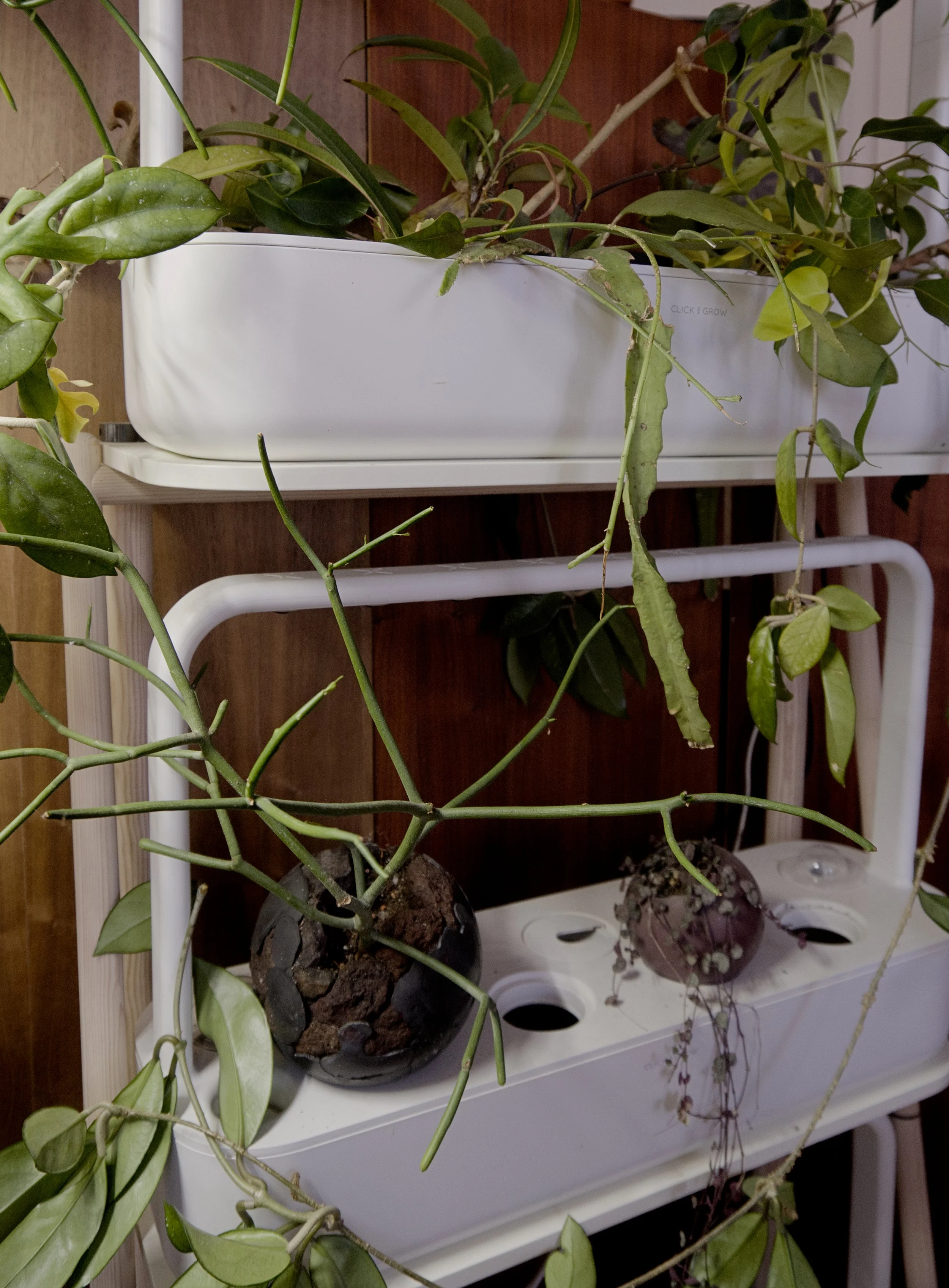
This can sound like a small problem, and it is. But small domestic decisions are often what make a room feel either considered or neglected. A plant that no longer fits can quietly change the atmosphere of a space. It can make a corner feel cluttered, make a shelf feel tired, or make a room look as if no one has really looked at it properly in a while.
The solution is not always to throw the plant away. Often the problem is not the plant itself, but the way it is placed.
A plant that looks dull in one spot can look completely different somewhere else. Light matters, but so does height, background, furniture, colour and the container. A plant on the floor reads differently from the same plant at eye level. A plant against a white wall is different from a plant in front of wood, brick, concrete, curtains or books. Even a plant you are bored of can become more interesting if it is given a better frame.
The container plays a bigger role here than people usually admit. A pot is not just a practical object holding soil. It tells the room how to read the plant. A plastic nursery pot keeps saying “temporary”, even if the plant has been there for years. A small decorative pot can make a healthy plant look cheap or accidental. A heavier, rougher or quieter vessel can give the same plant more presence.
This does not mean every plant needs an expensive pot. It means the pot should match the role the plant has in the room. Some plants need to be made lighter. Some need more weight. Some need to disappear a little. Some need a stronger base because their leaves already bring enough movement. A very simple plant can handle a stronger container. A chaotic plant often needs the opposite.
A lot of the time, the real issue is scale. The plant was bought when it was small, but now the relationship between plant, pot and room no longer works. The leaves have grown beyond the shelf. The height is wrong next to the furniture. The plant is too narrow for the corner, or too wide for the table. Nothing is technically wrong, but visually the whole thing feels off.
This is where people often make the mistake of buying another plant. Instead of fixing the first arrangement, they add more green around it. The unwanted plant stays where it was, now joined by two smaller plants that also do not quite make sense. What was once a slightly awkward corner becomes a collection of unresolved decisions.
It is usually better to stop and ask a few basic questions. Does this plant still work in this room? Is the problem the plant, the pot, the position or the fact that it reminds you of something you no longer like? Would it look better lower, higher, alone, grouped with something else, or in a completely different part of the flat?
These are simple questions, but they are useful because they separate care from taste. You can take care of something without liking it very much. You can also like the idea of a plant more than the reality of living with it. Both are common.
There is also a sentimental layer to this. Plants often come from specific periods of life. A plant from an old apartment, an old relationship, an old job or a friend who moved away can carry more memory than expected. It may not be emotionally important in an obvious way, but it has stayed through enough changes that removing it feels strange.
Sometimes that history is valuable. A home that only contains things chosen recently can feel too controlled, too clean, too much like a finished image. Older plants, especially imperfect ones, can make a room feel more lived in. They show that the space has changed over time and was not assembled all at once.
But history is not always a good reason to keep something. Sometimes a plant is not adding character. It is just taking up space. Sometimes it belongs to a room that no longer exists. Sometimes giving it away is more honest than keeping it badly.
This becomes especially clear after moving flats. A plant that used to make sense can suddenly look completely wrong in a new room. It is the same plant, the same pot and the same owner, but the situation around it has changed. The old corner had warmer light. The old wall had colour. The old floor made the pot feel heavier. The old furniture gave the plant a reason to be there. In the new room, it looks random.
That is not really the plant’s fault. It just shows how dependent plants are on context. We often talk about plants as if they either work or do not work, but most of the time they work somewhere. A plant that looks tired in one room can look relaxed in another. A plant that feels too domestic in one interior can look sharp and architectural in a different one. The difference is rarely only the species. It is the whole arrangement.
This is also why plant styling can become misleading. A plant that looks perfect in a photograph may be placed only for the image. It may not make sense once someone actually lives around it. Real rooms have radiators, sockets, bad corners, shelves that are slightly too high, windows that do not give light evenly, furniture that has to stay because it is useful, not because it looks good. Plants have to deal with all of that.
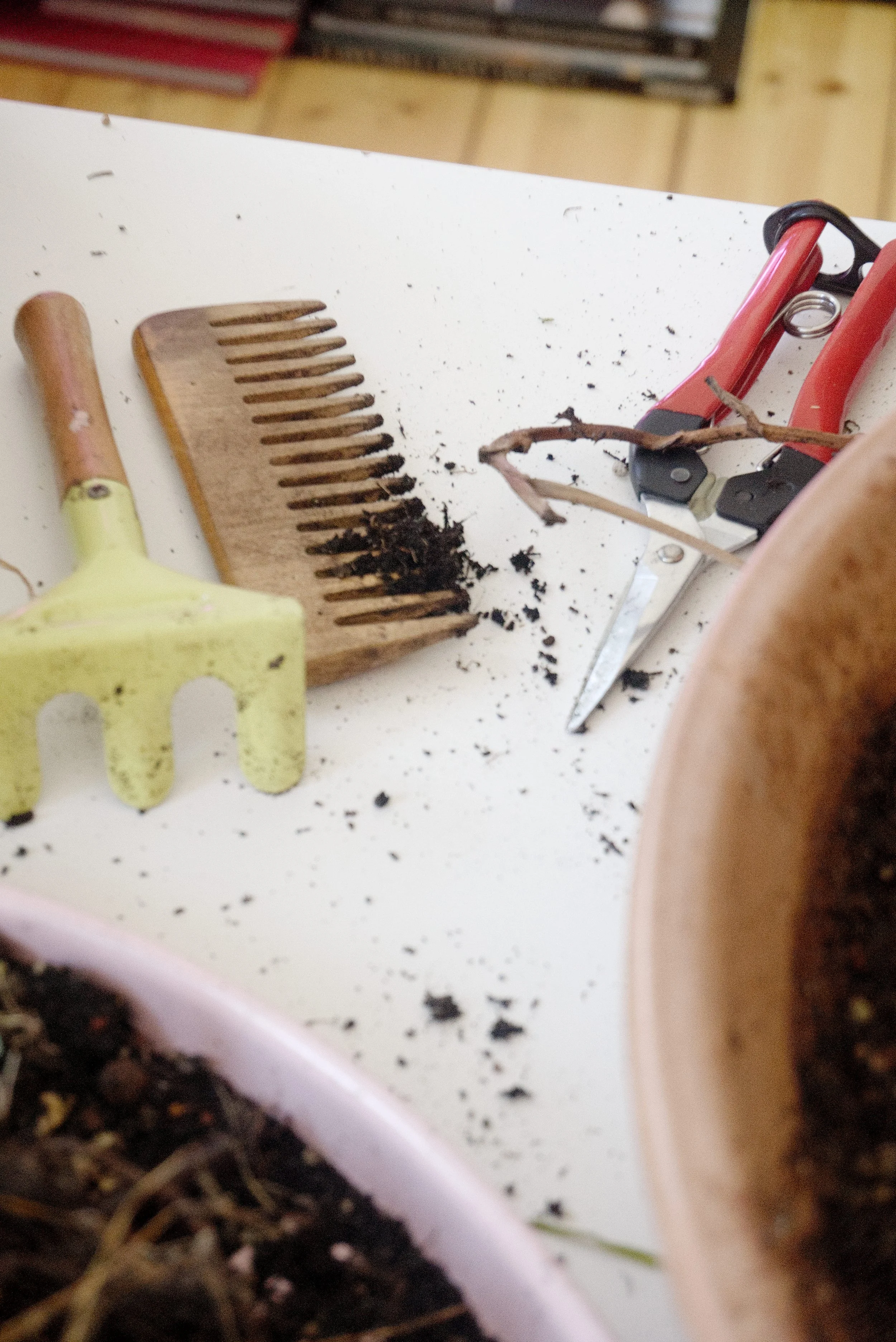
A good plant arrangement should not only look good for one photo. It should be able to survive normal use. It should still make sense when the plant grows unevenly, when one leaf gets damaged, when the pot gets dusty, when the room changes slightly, when someone moves the chair or adds a lamp. If the whole arrangement only works when everything is perfectly still, it is probably too fragile.
That is one reason older plant setups can sometimes look better than new ones. They have had time to settle. The plant has grown into the light. The owner has moved it a few times. The pot may have been changed once or twice. The room has adjusted around it. It no longer looks like something bought last weekend to fill a gap.
There is a difference between a plant that has been placed and a plant that has arrived.
The plant you would not buy again often sits somewhere between those two states. It has been around long enough to have history, but not enough importance to be fully considered. It is part of the room, but in a lazy way. It is not a mistake exactly. It is more like an old decision that nobody has reviewed.
That is why looking at these plants properly can be useful. They show where a home has stopped paying attention. Not in a dramatic way. Just in the ordinary way rooms collect things. A pot stays because it was already there. A plant stays because it is still alive. A shelf stays arranged in a way that made sense two years ago. Nothing is wrong enough to force a change, so nothing changes.
This is how interiors become tired. Not because everything is ugly, but because too many things are there by default.
Plants make this more visible because they do not freeze in place. If an object is ignored, it simply gathers dust. If a plant is ignored, it still changes. It becomes leggy, heavy, sparse, too tall, too wide, or strangely bent toward the only decent light source. It keeps producing evidence that time has passed.
Sometimes that evidence is beautiful. Sometimes it is just annoying.
A plant that has become too tall for its spot is not always a care problem. It may be a placement problem. A plant that looks thin and nervous on a shelf may need to be lower. A plant that feels visually weak may need a stronger container. A plant that looks too busy might need more empty space around it, not more plants next to it. A plant that looks old-fashioned may not need to be removed. It may just need to be placed somewhere less polite.
This is where the material around the plant matters. Concrete, ceramic, plastic, terracotta, metal, glass and wood all change the way a plant is perceived. A soft plant in a hard vessel feels different from a soft plant in a soft-looking pot. A sharp plant in a rough container feels different from the same plant in something glossy. The point is not to follow rules. The point is to notice that the plant is never seen alone.
A lot of plants people get bored of are not actually boring. They are just badly framed.
The same thing happens with art. A print can look cheap in the wrong frame and suddenly serious in the right one. A plant works similarly, except the frame is not only the pot. It is also the wall, the floor, the furniture, the light, the height and the amount of space around it.
The mistake is treating the pot as an afterthought. It usually becomes part of the plant’s identity. A nursery pot can be useful, but if a plant stays in one for years, it keeps looking unfinished. That may be fine in some rooms. In others, it makes the whole thing feel temporary and slightly neglected.
A better container does not have to make the plant look more decorative. In many cases, the opposite is better. Some plants become more interesting when they look less decorated. A rougher, heavier or simpler vessel can make the plant feel less like a lifestyle accessory and more like something with weight in the room.
This matters because many unwanted plants are not unwanted because they are unhealthy. They are unwanted because they still look like the moment they were bought. A small supermarket plant in a cheerful pot may be fine for a few months. Years later, the same combination can feel strange. The plant has aged, but the setup has not.
That mismatch is often what people are reacting to without knowing it.
They say the plant looks wrong. Really, the relationship between the plant and the room is outdated.
There is another part of this that has less to do with design and more to do with honesty. Sometimes the plant looks fine. The pot is fine. The placement is fine. You just do not like it. Maybe you never really did. Maybe it was a safe choice. Maybe you bought it because it was easy. Maybe everyone had one at the time. Maybe you wanted the room to feel more grown-up, warmer, calmer, more alive, and this was the quickest way to get there.
There is nothing wrong with that. Most homes are built from a mix of clear choices and approximate choices. Not everything begins with deep taste. Sometimes you just need a lamp, a table, a chair, a plant. You choose something good enough, and it becomes part of the room.
The problem only starts when good enough stays too long without being questioned.
A plant you would not buy again does not always need to leave. But it does deserve a decision. Keeping something by choice is different from keeping it because it would feel slightly annoying to decide.
That decision can be very simple. It can mean moving it to a less central place. It can mean cutting it back. It can mean giving it a proper container. It can mean accepting that it is not a beautiful plant, but it makes the room feel less perfect in a useful way. Or it can mean giving it to someone else.
Giving plants away should probably be more normal than it is. People do it, but often with a sense that they have failed somehow. They apologise for the plant. They explain that it is healthy, just not right for their flat. They make it sound like a confession.
It does not need to be that complicated. A plant can stop making sense in one home and still be completely worth keeping in another. Different windows, different habits, different furniture and different taste can change everything. Someone else may genuinely like the plant you have been tolerating for years.
In that sense, giving away a plant can be a better kind of care than keeping it in the wrong place indefinitely.
There is a point where keeping something alive is not the same as treating it well. A plant that is always in a bad corner, always watered late, always half-forgotten and always slightly resented might be better off somewhere else. Not because plants have feelings in the way people do, but because the arrangement has stopped working.
This also applies to half-dead plants that sit around for months because nobody wants to admit they are finished. Almost every plant person has done this. A few dry stems remain in a pot. One leaf is still technically alive. The soil is old. The plant is not really recovering, but it is not completely dead either. So it stays.
At some point, this becomes less about hope and more about avoidance.
There is nothing wrong with trying to rescue a plant. It can be satisfying. Some plants recover in surprising ways. But not every plant has to become a project. Sometimes the honest answer is that it did not work, and the room will feel better when the failed rescue is gone.
This is where people often confuse care with reluctance. Care is active. Reluctance just leaves things in place.
A cared-for plant does not have to be perfect, but it is being noticed. An ignored plant may still be alive, but it is not really part of the room in a meaningful way. It occupies space without being chosen.
The same can be true of many things in a home, but plants make it more obvious because they introduce responsibility. They force a small relationship. Even a low-maintenance plant still asks something from you. Water. Light. Space. Dusting. Repotting eventually. A decision when it becomes too large. Another decision when it stops looking good.
That is why the plant you would not buy again is a useful test. It asks whether you are still making choices in your own space or just managing leftovers from older ones.
It also asks what role plants are supposed to play in a home.
If plants are only decoration, then an unwanted plant should be removed as soon as it stops looking good. If plants are only living beings, then perhaps every surviving plant deserves to stay. Neither view is quite right. Houseplants are both practical and aesthetic, both living and arranged. They belong to care and to taste at the same time.
That is what makes them complicated.
A home with plants should not feel like a showroom. It should not feel like a plant hospital either. Somewhere between those two is a better approach: living with plants as things that are allowed to change, but not allowed to make the room worse forever just because they are alive.
This sounds harsh only if we pretend that keeping something is always kinder than letting it go. In practice, keeping a plant badly is not much of a virtue. If it annoys you every time you see it, if it makes a corner feel worse, if you only water it because throwing it away would feel guilty, then the relationship is already not very generous.
It might still be worth keeping. But then it should be kept honestly.
Maybe its job is not beauty. Maybe it gives the room history. Maybe it breaks the taste a little. Maybe it makes the space feel less designed, which can be a good thing. A room where every object is perfectly selected can feel cold, even if everything is beautiful. A slightly strange older plant can soften that. It can make the room feel lived in rather than assembled.
But there is a difference between character and neglect.
Character feels intentional, even when it is imperfect. Neglect feels like nobody wanted to deal with it.
The same plant can fall into either category depending on how it is held in the room. An old, uneven plant in the right vessel can look calm and settled. The same plant in a dusty plastic pot behind a chair can look forgotten. The plant has not changed. The attention around it has.
That is probably the main point. Plants do not only need care in the biological sense. They also need attention in the visual and spatial sense. They need someone to notice whether they still make sense where they are.
This does not mean constantly rearranging everything. That would be tiring and usually unnecessary. It just means reviewing the room occasionally with some honesty. What is here because it works? What is here because it used to work? What is here because it is still alive and nobody knows what else to do with it?
Those questions are not only about plants, but plants make them easier to see.
A plant can outlast the room you bought it for. It can outlast the shelf, the flat, the relationship, the taste, the phase, the version of yourself that wanted exactly that kind of green in exactly that kind of pot. When it does, you have to decide whether to bring it properly into the present or let it belong somewhere else.
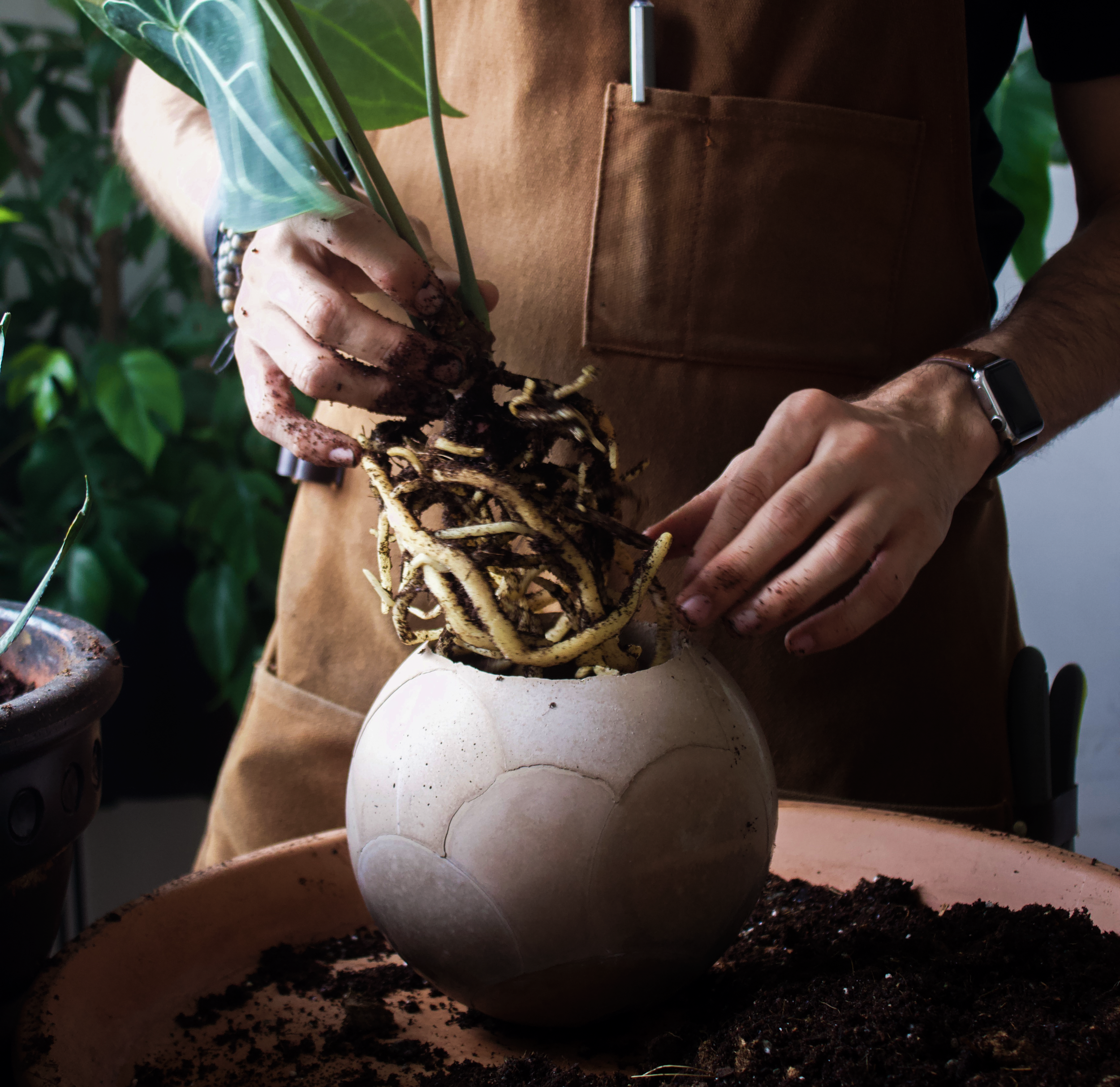
That is not a dramatic decision. It is just part of living with things that grow.
Maybe the plant stays. Maybe it gets moved. Maybe the pot changes. Maybe it becomes a cutting and starts again smaller. Maybe it goes to a friend. Maybe it finally leaves.
The important thing is that it stops being invisible.
Because the plant you would not buy again is not really a problem because it is ugly, outdated or ordinary. It is a problem because it sits in the room as an old answer to a question nobody is asking anymore.
Do I still want this here?
Sometimes the answer is yes, but for a different reason than before. Sometimes the answer is no. Both are useful.
A good room is not a room where everything is new, perfect or currently fashionable. It is a room where things are still being chosen. Not all at once, not obsessively, not for display, but with enough attention that the space does not become a storage place for old decisions.
Plants are good at revealing this because they keep changing. They make time visible. They show where care is real, where taste has moved on, where the room has adjusted and where it has not.
The plant you would not buy again might be worth keeping. It might be exactly the thing that makes the room feel less polished and more human. Or it might simply be time for it to go.
Either way, it deserves to be looked at properly.
Not because every plant has to be special.
Because sometimes the most ordinary plant in the room is the one that tells you most clearly whether the room is still alive to you.
