
What the Air Knows: Plants, Scent, and the Science of Aromatherapy
Somewhere between spa menus, wellness trends, and endless shelves of lavender-scented everything, aromatherapy has been flattened into something decorative, pleasant, perhaps, but not particularly serious. A diffuser in the corner, a candle with a botanical label, a vague promise of calm that asks nothing of you and delivers accordingly. What gets lost in that version of the story is that scent has always been more than atmosphere, and the plants behind it have always been doing something more specific than making a room smell nice.
Long before essential oils were sold in amber bottles, people were burning rosemary branches in homes, crushing chamomile flowers into warm water, and planting lavender near doors and windows, because they understood, empirically if not scientifically, that it changed how a space felt and how a body moved through it.
The word aromatherapy itself is relatively recent, coined in the 1930s by French chemist René-Maurice Gattefossé after his work with plant-derived aromatic compounds. But the relationship between humans and medicinal scent is considerably older than the term: ancient Egyptian perfumery, Roman baths, Greek herbal medicine, and traditional healing systems across Asia all treated fragrance as something active rather than ornamental. The real story, in every case, begins with the plants, that are living organisms producing volatile organic compounds for their own reasons, which have to do with defense, pollination, communication, and survival, and which we happen to breathe in.
The Most Direct Route to the Brain
Smell behaves differently from every other sense, and understanding why is useful before evaluating any of the claims made about it.
Sight and sound travel a longer route through the brain, passing through several processing systems before emotional interpretation begins. Smell is more direct: odor molecules enter through the nose, bind to receptors in the olfactory epithelium, and send signals almost immediately to the limbic system, which is the region involved in memory, emotion, and stress regulation, without the same intermediate steps. This is why scent can feel strangely instantaneous in a way that other sensory input does not. You smell rosemary and remember a kitchen you haven't thought about in years. Lavender arrives and your shoulders drop before you have consciously decided to relax. This is how the olfactory system is anatomically organized, and it is also why plant-derived scents have become the focus of serious physiological research, as measurable chemical interaction with a nervous system that is already primed to respond to them.
Lavender and the Chemistry of Quiet

Lavender is the cliché of calm. Its primary compounds, particularly linalool and linalyl acetate, have been studied extensively for their effects on anxiety, nervous system regulation, and cortisol levels. Clinical reviews have found consistent evidence that lavender inhalation can reduce stress markers and improve symptoms of mild anxiety, particularly in environments where anticipatory stress is elevated, such as medical settings before procedures.
This helps explain why a healthy lavender plant in a sunny window often feels qualitatively different from a synthetic lavender room spray, even to people who cannot articulate why. The scent of the living plant is more complex, less flat, tied to the physical presence of the whole organism with its dry stems, the slight resinous note from the leaves and the visual texture of the flowers.
Eucalyptus and the Feeling of Air

Eucalyptus is most commonly associated with the sensation of easier breathing, and there is a specific compound responsible for that association.
Cineole, also called eucalyptol, is the primary aromatic compound in most eucalyptus species and has been studied for its effects on respiratory function, airway inflammation, and subjective breathing comfort. Research suggests it can reduce symptoms associated with airway inflammation and improve perceived ease of breathing, particularly in conditions where congestion or irritation is a factor, which explains why eucalyptus appears so consistently in steam inhalation, shower bundles, and preparations used during respiratory illness.
Where things get more complicated is at the point where the living plant and the extracted oil part ways. Most indoor eucalyptus plants do not passively release enough cineole to noticeably affect respiratory comfort in the way that concentrated essential oil inhalation might; they are beautiful and architectural and subtly aromatic when touched or brushed, but they are not functioning as standing diffusers. That distinction matters particularly when people buy plants expecting medicinal performance from what is, in practice, decorative foliage. The plant and the oil are related, but they are not interchangeable.
Rosemary and Mental Clarity
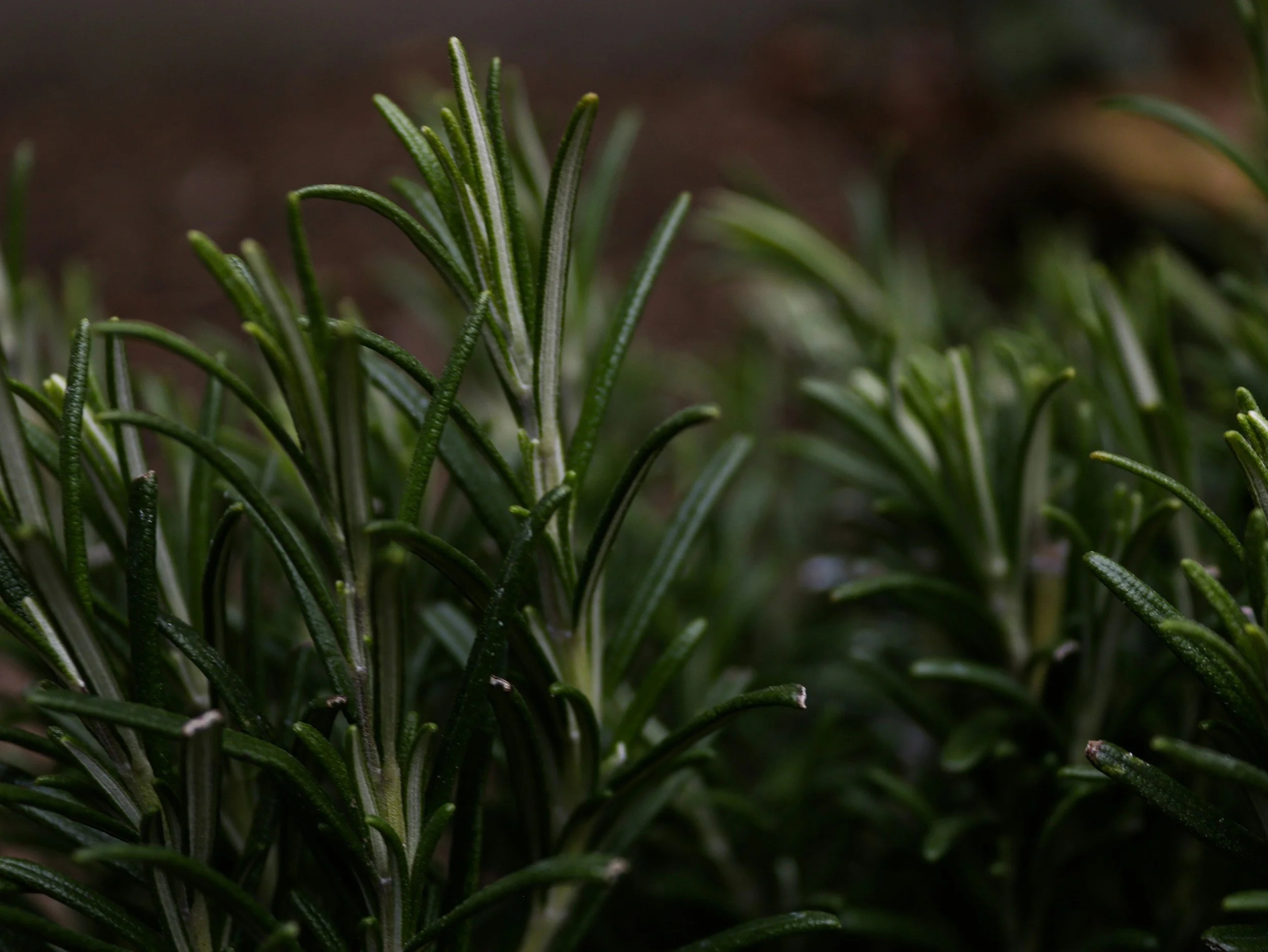
Rosemary has carried a reputation for memory and mental sharpness for long enough that the association predates any formal research into it, appearing in old rituals of remembrance and concentration across multiple cultures in a pattern that suggests people were consistently noticing something real.
More recent studies have explored rosemary aroma and cognitive performance, particularly attention, memory speed, and alertness, with some findings suggesting that inhalation of rosemary compounds may support working memory and mental clarity, that is likely through a combination of neurological stimulation and mild physiological arousal. In practical terms, rosemary tends to feel sharpening rather than soothing, less suited to winding down and more to beginning something.
As a houseplant, it is also one of the more honest aromatic herbs in the sense that it responds immediately to contact: you brush past it and the scent arrives without any need for extraction or processing, because it belongs to the surface of the leaves themselves. The difficulty is that rosemary is often a disappointing indoor plant unless conditions are genuinely right. It requires intense light, excellent drainage, and good air circulation, and without those it declines quietly and loses most of its aromatic character.
Chamomile and the Smaller Scale
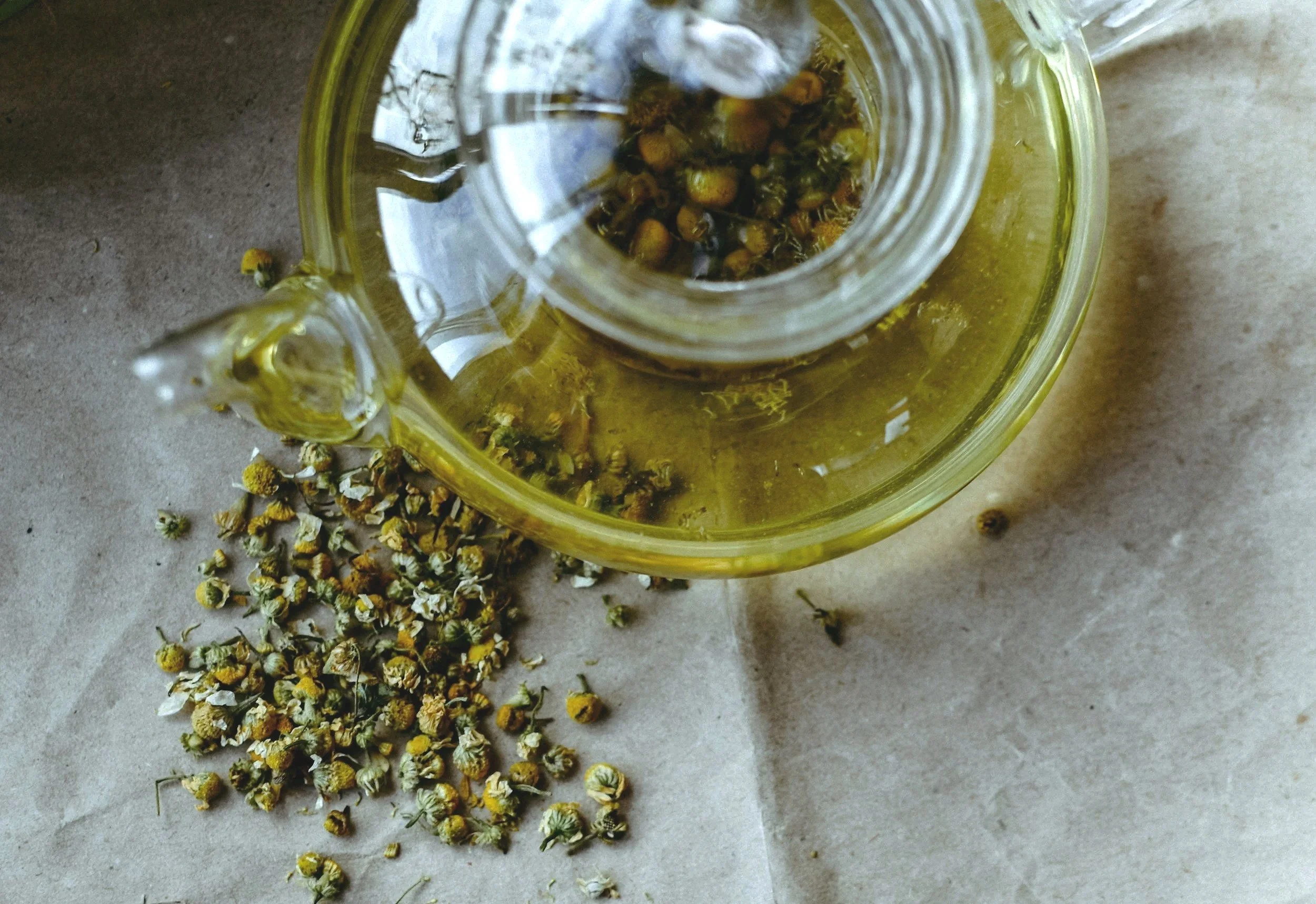
Chamomile works quietly. Its compounds, including bisabolol and chamazulene, are associated with mild calming and sedative effects, and the plant has a long documented history of use for rest, digestion, and nervous tension across European and Asian herbal traditions.
Most people encounter chamomile first as tea, which makes practical sense: scent and ingestion working together through different pathways toward similar ends. As a living indoor plant it is less commonly grown, partly because it wants light and air movement and tends to be genuinely happier outdoors or in containers that can live seasonally near open air. Dried chamomile flowers retain much of their characteristic soft, slightly apple-like scent, which makes them useful in a domestic context even outside of a growing season, and the lesson the plant offers more broadly is that not every useful or aromatic plant is suited to permanent indoor life: sometimes the most honest version of a plant is a seasonal one.
The Plant Versus the Product
People often assume that if a plant has documented effects, owning the living plant and using a derived essential oil must lead to essentially the same result. They don't, and the difference is worth understanding.
A living plant contributes to a domestic space in several ways simultaneously: subtle and complex scent, a degree of humidity regulation, the visual and psychological presence of something alive and growing, and the less quantifiable but genuine effect that caring for a living organism has on the person doing it. Some plants improve the subjective quality of a space simply because spaces that contain living things feel different to inhabit, and this is not nothing even when it resists precise measurement. What most indoor plants do not do is dramatically purify air at the scale that makes a measurable difference in a normal apartment. The number of plants required to achieve significant filtration effects in a typical domestic space is well beyond what most interiors can reasonably hold.
Essential oils are a different proposition. They are concentrated extracts that act more quickly and more intensively than the living plant precisely because they are stronger, and they require more care in use than their status as natural products sometimes leads people to assume. The plant is slow and diffuse. The oil is concentrated and direct. Neither is superior to the other, but they belong to different conversations, and treating them as interchangeable tends to lead to misplaced expectations in both directions.
Let the Plants Lead
Aromatherapy becomes a more interesting subject when it is approached without the pressure of transformation, when the claim is not that a plant will reorganize your experience of being alive, but that scent shapes experience in specific, documented, and sometimes surprising ways.
Some compounds have measurable physiological effects on the nervous system. Others create forms of familiarity and association that matter more than we tend to admit when we are trying to be rigorous about what counts as evidence. The olfactory system is old, direct, and deeply connected to the parts of the brain that regulate emotion and memory, and plants have been producing volatile compounds and interacting chemically with the animals around them for far longer than anyone has been trying to sell the relationship. Between the exaggeration of wellness culture and the reflexive dismissal that sometimes accompanies it, there is usually a quieter and more durable truth: a rosemary plant on a windowsill that answers when you touch it, mint that releases its scent without being asked, lavender drying near a door. Not magic, just biology, close enough to smell.
Did any of this surprise you? If you know other curious facts about plants and their effects on the body and mind, we would genuinely like to hear them.
SourcesGattefossé, R.M. (1937). Aromathérapie. Girardot.Koulivand, P.H., Khaleghi Ghadiri, M., & Gorji, A. (2013). Lavender and the nervous system. Evidence-Based Complementary and Alternative Medicine. https://www.ncbi.nlm.nih.gov/pmc/articles/PMC3700021/Moss, M. et al. (2012). Aromas of rosemary and lavender essential oils differentially affect cognition and mood in healthy adults. International Journal of Neuroscience. https://www.ncbi.nlm.nih.gov/pmc/articles/PMC6288289/Posadzki, P. et al. (2012). Adverse effects of aromatherapy: a systematic review of case reports and case series. International Journal of Risk & Safety in Medicine. https://www.sciencedirect.com/science/article/pii/S0944711316300362