
The Plant That Doesn't Belong and What Happens When You Plant It Anyway
There is a fig tree growing out of a wall in Kreuzberg. No pot, no soil visible, no one who planted it. Its roots have found their way into the masonry and it has been there long enough that nobody questions it anymore. It belongs, in the way that things belong when they have simply been somewhere long enough and nobody removed them.
Every plant has a history of movement. Before it arrived in the place where it now grows, in the garden, on the balcony, in the soil of the pot on the windowsill, it came from somewhere else. Sometimes that journey took centuries. Sometimes it involved ships, smugglers, colonial administrators, and the systematic transfer of living organisms across continents in service of empire. The question of which plant belongs where turns out to be one of the most revealing questions a culture can be asked. The answers are almost never purely botanical.
The botanical clearing-house
In the mid-19th century, Kew Gardens in London operated as what its own director called "a botanical clearing-house for the empire." To walk through the great glasshouses then was to move through a compressed version of the world's climates: humid air, the smell of soil and sap, plants from a dozen different continents growing in controlled conditions a few degrees of latitude from each other. It was one of the great scientific spectacles of the Victorian age. It was also an instrument of economic strategy.
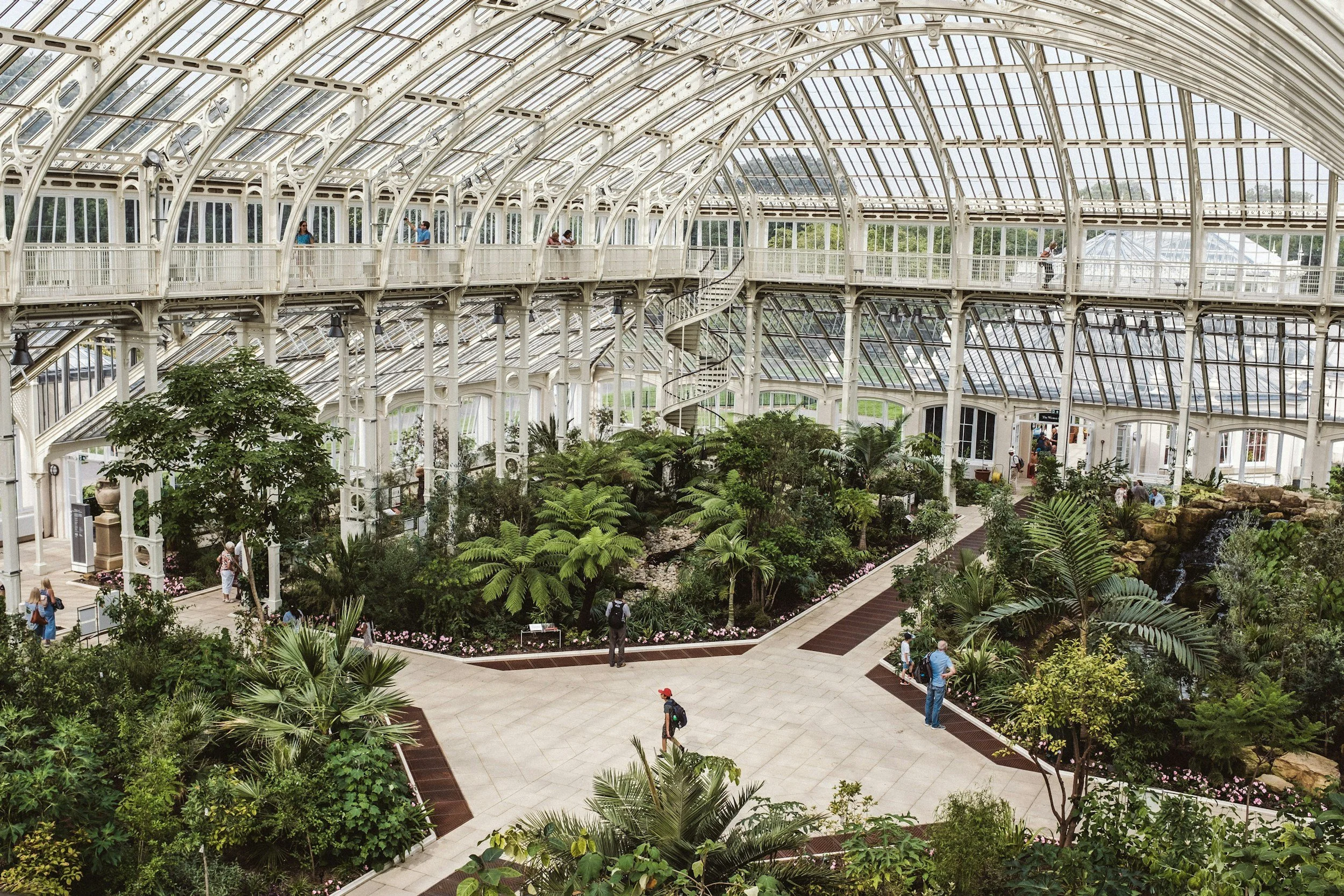
Plants and knowledge flowed into Kew from every corner of the empire (tea from China, rubber from Brazil, breadfruit from the Pacific, cinchona from the Andes) and were then sent out to other colonies or plantations, allowing Britain to sustain and expand its reach. This was a deliberate strategy of extraction and redistribution, with botanical gardens as the infrastructure.
The cinchona specimens brought back from South America by botanist Richard Spruce in the 1860s are a precise example. The Red Bark he carried (Cinchona succirubra) had the highest quinine content of any known variety, making it extraordinarily valuable for treating malaria in tropical colonies. Britain was the only country to collect and cultivate living specimens in botanical gardens rather than simply importing bark, ensuring a supply under imperial control. The plant was removed from its native Andean context, its associated indigenous knowledge effectively appropriated without credit, and replanted in British India and Sri Lanka, where it saved millions of lives and simultaneously collapsed the South American trade that had sustained the communities who had cultivated it for generations.
Less than 4% of the rubber seeds smuggled out of the Amazon by Henry Wickham germinated in Kew's hothouses. But that was enough. Those seeds transformed vast tracts of land in British colonies in South and Southeast Asia into large-scale rubber plantations, with British Malaya becoming the world's largest rubber producer by the early 20th century. The plant did not move on its own. It was carried, deliberately and strategically, by people who understood exactly what they were doing, and by an institution that made the whole operation look like science.
The tomato's long journey to becoming Italian
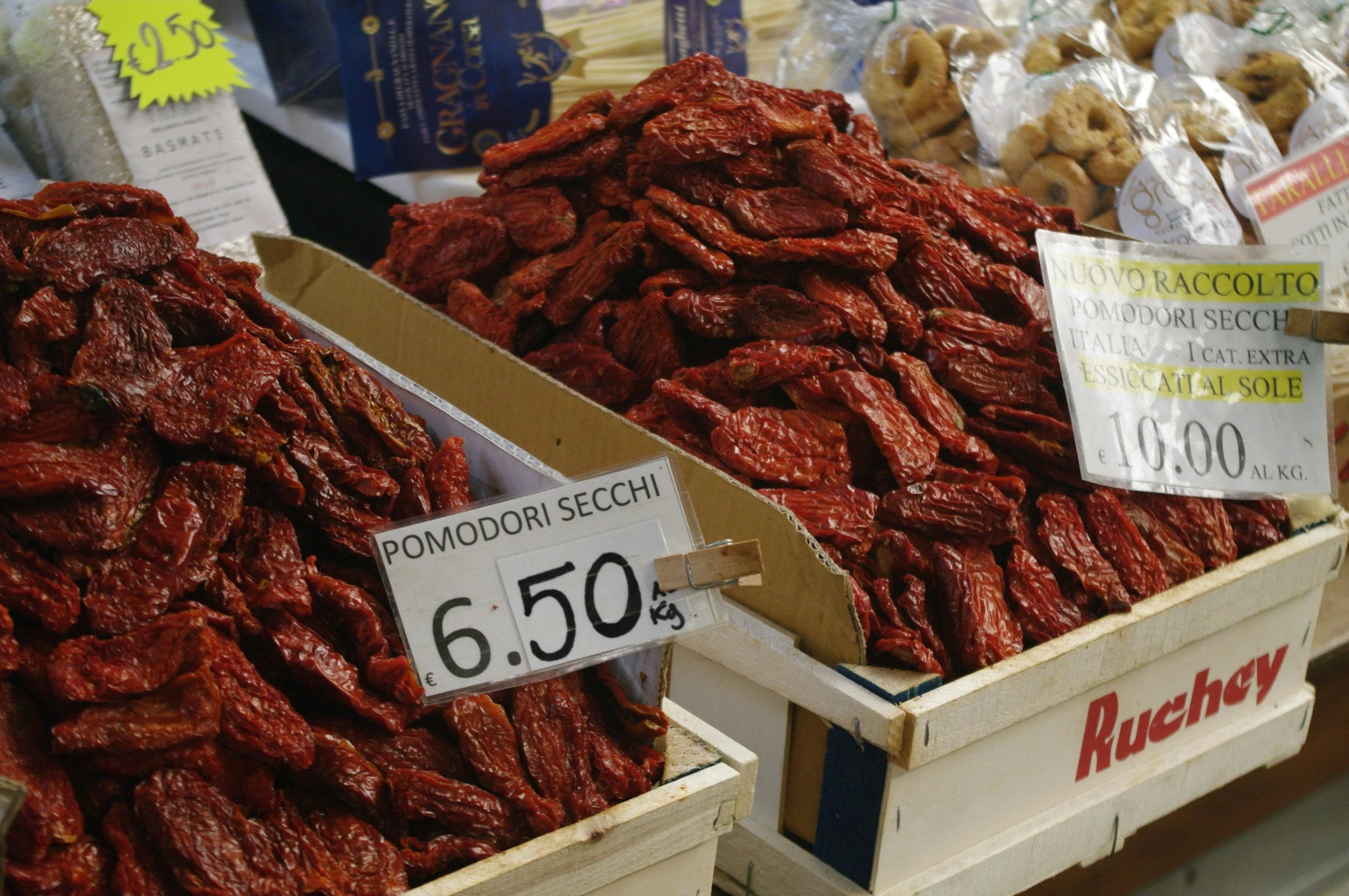
Not every plant that crossed a border did so under orders. Some moved through trade, accident, and the slow work of cultural adoption over generations. Some were the result of trade, accident, and the slow work of cultural adoption over generations. The tomato is perhaps the most instructive example.
Tomatoes arrived in Europe during the Columbian Exchange of the 16th century, brought from the Americas. Initially, Italians did not welcome them. Tomatoes were considered ornamental plants, grown in gardens for their bright red fruit but not consumed due to fears of toxicity. The first reference in print appeared in 1544, in an herbal guide by Pietro Andrea Mattioli, who called it pomo d'oro (golden apple) which is where the Italian pomodoro comes from today.
The first written recipe for tomato sauce did not appear until 1692, when a chef named Antoni Latini, working for the Spanish Viceroy in Naples, recorded a preparation he called "tomato sauce in the Spanish style." It took almost two hundred years from introduction to integration, and another century after that before the tomato became genuinely inseparable from Italian identity. The process was driven by climate, by the needs of the poor, by regional experimentation, and eventually by the cultural politics of Italian national identity formation in the 19th century. Emblematic dishes that used tomatoes, such as pasta al pomodoro, pizza margherita, were promoted as national symbols and exported internationally, reinforcing the tomato's iconic status.
A plant from the Andean highlands, grown cautiously in monastery gardens for decades as a botanical curiosity, considered poisonous by many, is now so thoroughly embedded in Italian culture. The plant that didn't belong became the plant that defines the place.
Botanical nationalism
The Milan palm controversy is a small, recent version of a much older argument. When a large American coffee chain planted tropical palms and banana trees in the Piazza del Duomo in Milan in 2017, the debate about whether these species belonged in a square became unexpectedly heated, eventually resulting in the palms being replaced with alpine natives, camphor, rhododendron, philadelphus, all species from the mountains from which the cathedral's own marble was quarried.
This is botanical nationalism in a minor key. The idea that a landscape has a correct flora, meaning that some plants belong and others are intruders, is a cultural construction as much as an ecological one. It has been used, historically, in ways that go well beyond discussions about urban aesthetics, sometimes in minor key, as in Milan, and sometimes in ways that carry a much darker weight. The designation of certain plants as native and others as invasive has a politics that mirrors, sometimes uncomfortably, the politics of belonging applied to people. In 1930s Germany, the concept of Heimatpflanzen (homeland plants) was actively promoted by the Nazi regime as part of a broader ideology of racial and territorial purity; certain species were classified as foreign and undesirable in precisely the same language used about people.
And yet the desire to protect genuine ecological relationships, the slow accumulation of interdependence between a plant and the insects, soil organisms, and other plants around it, is also real and legitimate. The question is not whether a plant came from somewhere else. Almost every plant we grow did. The question is what kind of relationship it forms in its new home: extractive or reciprocal, imposed or integrated.
The fig in Berlin. The wisteria in Japan.
Some plants crossed borders and became something entirely new in their adopted context, not erasing what was there but becoming genuinely part of it.
Wisteria is native to China and Korea. It arrived in Japan via trade in the 8th century and is now so thoroughly embedded in Japanese visual culture that it has its own dedicated viewing season, fuji matsuri, and centuries of appearance in woodblock prints, poetry, and garden design. What integration actually looked like, across that thousand years, was incremental and unremarkable, growers discovering it suited certain walls, certain soils, certain microclimates; the plant finding its place not through declaration but through repeated survival. The fig followed a similar arc across the Mediterranean and into northern Europe: native to the Middle East and western Asia, it now grows in Berlin, Lisbon, and Naples with the ease of something that has always been there. In a city built on sandy, nutrient-poor soil, the fig growing from a south-facing wall with its roots in the masonry is a small study in what integration actually requires: not permission, but conditions.
Which is, in the end, exactly what is happening on the windowsill.
Every houseplant is, in some sense, a plant that doesn't belong. Taken from a tropical forest or a Mediterranean hillside, placed in a pot in a city apartment in a climate it was not designed for, kept alive by the attention and judgment of whoever is tending it.
So what happens when you plant it anyway? Sometimes the plant dies. The conditions were too far from what it needed, the relationship too one-sided, the environment more about the desire of the grower than the requirements of the plant. Sometimes it survives, technically, in a diminished way: present but not thriving, going through the motions of growth without really inhabiting the space. And sometimes, given the right light, the right soil, enough attention and enough restraint, it does something that nobody fully planned for. It adapts, finding what it needs in the conditions available.
The fig in the Kreuzberg wall did not ask for permission. It found a crack, enough moisture, a south-facing aspect, and it stayed. That is the closest thing to an answer the plant world offers to the question of belonging: not origin, not documentation, not the authority of someone who decides what is native and what is not. Just the quality of the relationship between a living thing and the place it finds itself in. Whether that relationship sustains it or doesn't. Whether the conditions created for it are honest enough, attentive enough, close enough to what it actually needs, that it can do more than survive.
Sources: Garden Patch, MIT Press, Our Edible Italy, CNN, La Cucina Italia