
Roots of Power: Plants That Shaped History
There is a version of history that moves through kings, wars and borders drawn in ink. And then there is the version that moves through roots, sap, soil, and the particular properties of a plant that made it worth killing for. The second version is less taught, and this makes it often more intriguing.
Plants did not merely play a supporting role in the making of the modern world, but rather, they were frequently the cause of it. The commodity that sparked a conflict, the crop that funded a colonial project, the species whose scarcity or abundance determined who ate and who didn't, who held power and who was made to serve it.
The Flower That Became Too Valuable
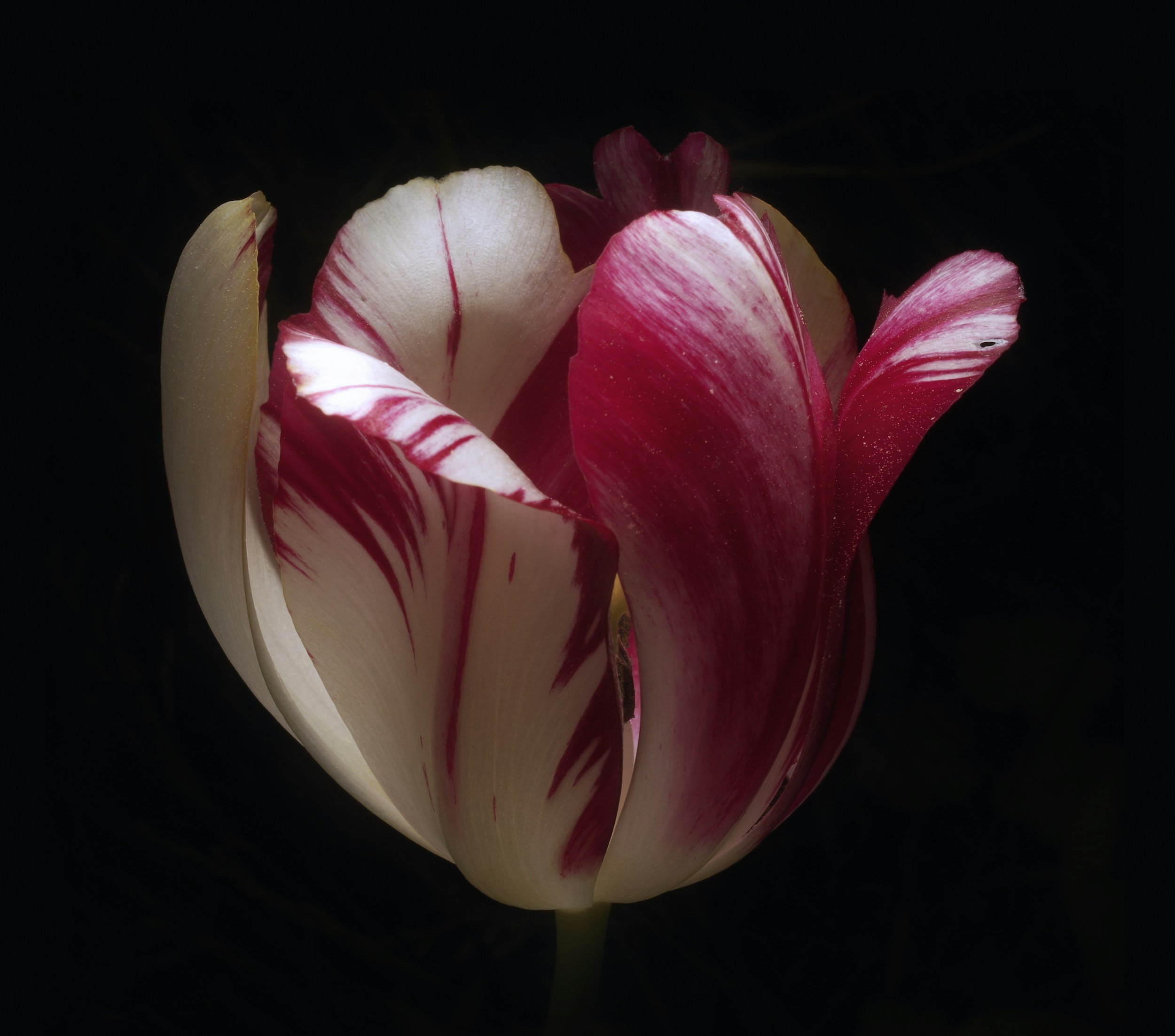
Tulips are one of the earliest recorded examples of how completely humans can lose perspective over a plant.
In the early seventeenth century in the Dutch Republic, the price of tulip bulbs rose to extraordinary heights. At the peak of what is now called tulip mania, a single rare bulb, the Semper Augustus, prized for its flame-like streaks of color, was reportedly worth more than a skilled craftsman might earn in a decade. Bulbs were traded on futures contracts before they were even harvested. They changed hands multiple times without anyone ever seeing them.
Then, in February 1637, the market collapsed within days. Prices fell by more than ninety percent. People who had speculated on contracts they couldn't fulfill were ruined.
The strange part is that the tulip itself was unchanged by any of this. It did not become rarer, or more beautiful. The flower was the same flower it had always been. What shifted was entirely on the human side: a collective agreement, then a collective panic, about what this particular plant was worth. The tulip became the first clearly documented speculative bubble in recorded economic history because of the meaning projected onto it and what happened when that meaning suddenly evaporated.
Historians still debate the scale of the economic damage. But the more interesting question is not financial. It is about what happens when a plant's symbolic value detaches entirely from its material reality. That gap has opened, repeatedly, across history and the consequences have rarely been small.
Decorative Now. Devastating Then.
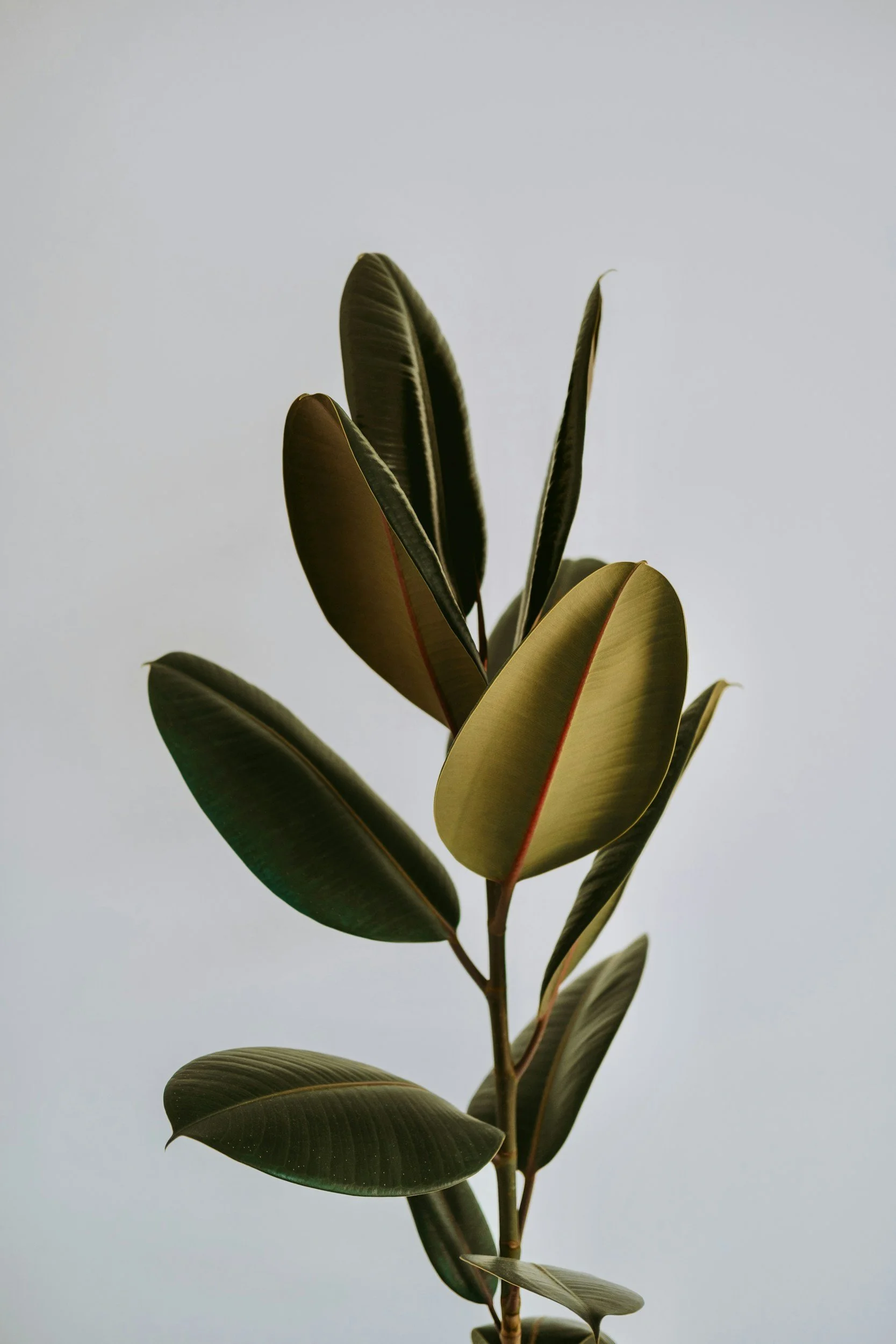
The ficus elastica, also known as the rubber tree, is a common houseplant now. You may have one. Its broad, glossy leaves have become almost decorative shorthand for a certain kind of interior. What most people do not know is what this plant's genus made possible, and at what price.
In the late nineteenth and early twentieth centuries, rubber became the most strategically valuable material on earth. Bicycle tires, industrial machinery, eventually automobile tires, all of it depended on latex harvested from rubber trees. The Amazon held wild rubber. The Belgian Congo held even more. And so the Congo became, briefly, one of the most profitable territories in the world, controlled personally by King Leopold II of Belgium.
What happened there is documented in detail, though it is not discussed as often as it should be. To meet rubber quotas, workers had their hands amputated when they failed to produce enough. Villages were burned. Hostages were taken. Estimates of the death toll from the period of Leopold's personal rule range from one million to ten million people. The system was driven by one thing: the demand for a plant's sap.
The rubber tree's properties, such as its latex, its speed of tapping and its yield, placed it at the center of one of the worst humanitarian catastrophes of the colonial era. That is what the plant made possible, because of the value human beings assigned to it and the lengths they were willing to go to control it.
The ficus on your shelf has this history in its roots.
The Most Political Plant in History

If rubber is an example of a plant whose exploitation was tied primarily to land and labor, where the plant was almost incidental to the violence, then the opium poppy is something different. The opium poppy was deployed as a deliberate geopolitical instrument.
By the late eighteenth century, the British East India Company had a problem. It was buying enormous quantities of Chinese goods (tea, porcelain, silk) but the Chinese market had little interest in British exports. The trade deficit was significant. The solution the Company arrived at was to grow opium poppies in Bengal and channel the processed drug into China through intermediaries, bypassing the Qing dynasty's prohibition.
The result was widespread addiction across Chinese society. When the government attempted to stop the trade by seizing and destroying opium stocks, Britain went to war. Twice. The Opium Wars of 1839–42 and 1856–60 ended with China ceding Hong Kong, opening treaty ports, and legalizing the trade. The consequences of those agreements shaped Chinese politics well into the twentieth century.
A psychoactive plant was used as a mechanism of economic and political domination. It became the means through which power was exercised over a society and profit was extracted at a scale and human cost that are difficult to fully account for. The plant was the instrument. The decisions were entirely human.
Everything Started With a Spice
Before rubber and opium, there were spices. And before the modern vocabulary of geopolitics, there was the Banda Islands.
The Banda Islands in what is now Indonesia were, in the early seventeenth century, the only place on earth where nutmeg grew. This made them extraordinarily valuable. The Dutch East India Company, the VOC, wanted exclusive control of the nutmeg trade, as it already controlled cloves elsewhere in the archipelago. In 1621, the VOC governor-general Jan Pieterszoon Coen oversaw the massacre of the Bandanese people. Estimates suggest that of a pre-contact population of around fifteen thousand, fewer than a thousand survived the combination of direct violence, forced labor, and starvation. The islands were then repopulated with Dutch colonists who ran the nutmeg plantations using enslaved workers.
The British held one island in the archipelago, Run, and it too grew nutmeg. In 1667, the Dutch and British negotiated a settlement: the British surrendered Run, and the Dutch ceded a small colony in North America. That colony was called New Amsterdam. It became New York.
This is not a footnote. It is the actual sequence of events, and it is worth sitting with: a seed, traded for a city.
The Quieter Side of the Same History
It would be wrong to leave this as only a story of violence. Plants have also, at times, moved in the other direction.
Quinine, derived from the bark of the cinchona tree native to South America, was for centuries the only effective treatment for malaria. Its spread through trade networks, and eventually its synthesis, saved lives without regard for political borders or colonial allegiances. Knowledge about the plant traveled further than any treaty could have carried it.
Botanical gardens are sometimes characterized purely as instruments of colonial extraction. Although many of them received plants through networks that were often coercive, they were also sites of genuine knowledge exchange. The Royal Botanic Gardens at Kew, founded in 1759, became one of the oldest and most significant repositories of plant knowledge in the world, and the information it gathered and circulated reached researchers and growers well beyond the institutional walls. The knowledge accumulated there has never belonged to any single group.
And at various moments in history, crops, such as rice, wheat, maize, potatoes, have served as the foundation for negotiation between peoples, as shared territory across which coexistence was built rather than contested. The Cherokee Nation's agricultural practices became a form of diplomatic argument and cultural evidence. Andean communities maintained remarkable crop diversity across centuries of political upheaval as a kind of living insurance: a way of holding knowledge and sustaining life through whatever came next.
Following any of these threads will lead to the same place: plants have always been entangled in what people want, what people fear, and what people are willing to do to each other.
There is something genuinely worth knowing in the fact that a spice rack holds compressed centuries of history, that a common houseplant carries the trace of a colonial catastrophe, that a flower once briefly convinced an entire economy to lose its mind. Plants are not passive backdrops. They have shaped the world and understanding that, even partially, changes how it feels to share space with them.
We find that interesting. We think you might too.
